Sugar and Brain Fog
Guideline: ADA Standards of Care 2025; NICE NG28 Type 2 Diabetes
Medically reviewed by Dr. Alexandru-Theodor Amarfei, M.D.
First published
Quick Answer
Sugar can contribute to brain fog when glucose spikes and crashes match the timing of your symptoms. The most useful clues are post-meal worsening, shaky episodes, normal average labs with variability, and whether balanced meals or post-meal walking change the pattern.
Key Takeaways
Fast read- 1
The strongest clue is timing: fog 1 to 3 hours after carbs, after missed meals, or during a clear crash window is more useful than the word "sugar" alone.
- 2
Reactive hypoglycemia can happen with completely normal HbA1c and fasting glucose. Average labs can miss the spike-crash pattern.
- 3
Food order, balanced meals, and post-meal walking can change symptoms quickly enough to be useful experiments.
- 4
Fasting insulin and HOMA-IR help catch insulin resistance earlier than glucose alone.
- 5
CGM or structured meal-and-symptom tracking is often more informative than repeating the same average markers.
- 6
Diabetes means persistently elevated average labs; reactive hypoglycemia usually means normal averages with unstable timing after meals.
- 7
Liquid sugar and carb-only meals are common trigger patterns.
- 8
If driving, pregnancy, or severe shaky episodes are part of the story, treat this as a clinician discussion, not just self-experimentation.
Historical Context
The Research History: When Blood Sugar and Brain Function Connected
This topic is not just a wellness trend. The timeline runs from insulin resistance theory through meal-order trials and modern CGM interpretation.
▼
Historical Context
The Research History: When Blood Sugar and Brain Function Connected
This topic is not just a wellness trend. The timeline runs from insulin resistance theory through meal-order trials and modern CGM interpretation.
Insulin resistance becomes a named syndrome
Reaven's Banting lecture formalized insulin resistance as a core upstream metabolic problem rather than an afterthought.
Lifestyle reversal gets landmark trial support
The Diabetes Prevention Program showed a 58% reduction in progression to type 2 diabetes with intensive lifestyle intervention.
Higher glucose is linked to worse brain outcomes even without diabetes
Studies in non-diabetic adults tied higher glucose exposure to poorer memory and greater dementia risk.
Meal order becomes a practical intervention
Protein and vegetables before carbohydrate measurably lowered post-meal glucose in clinical studies.
Personal CGM responses are shown to vary widely
The same food can produce very different glucose curves between people, making individualized tracking more useful than generic assumptions.
CGM interpretation targets are standardized
International consensus made time-in-range and time-below-range clinically usable for understanding variability.
Field Guide Diet Lens
Diet patterns that often overlap with this pattern
These are supporting pattern cues from the field-guide model. They are not a diagnosis, but they can help narrow what to test, track, or try first.
metabolic
The Processed Food Default
Diet is mostly packaged, takeaway, or convenience food. Fewer than 2 vegetable servings daily. Sugary drinks. Never tried an elimination diet.
Mediterranean reboot. You do not need a restrictive elimination — you need to start eating real food. This is the most forgiving protocol with the highest impact for your starting point.
Recipe previews
- Wild Salmon Clarity Bowl · Omega-3 DHA (anti-neuroinflammatory)
- Golden Turmeric Latte · Curcumin (NF-κB inhibitor)
- Broccoli Sprout Salad · Sulforaphane (Nrf2 activation)
metabolic
The Sugar Crasher
Fog after meals, energy crashes mid-afternoon, cravings for carbs/sweets, shakiness if you skip meals.
Protein-first meals. Eliminate refined carbs and added sugar. Pair carbohydrates with fat/protein/fibre. Eat every 3-4 hours — do not skip meals. Avoid intermittent fasting if you crash between meals.
Recipe previews
- Wild Salmon Clarity Bowl · Omega-3 DHA (anti-neuroinflammatory)
- Golden Turmeric Latte · Curcumin (NF-κB inhibitor)
- Blueberry Brain Smoothie · Anthocyanins (BDNF expression)
Mechanism overlap
Mechanisms this cause often overlaps with
These are explanation lenses, not diagnosis certainty. If this cause fits, these mechanisms can help explain why the pattern looks the way it does.
metabolic fuel instability
Metabolic Fuel Instability
When fuel delivery is inconsistent, the brain can swing between clarity and crashes, often around meals, fasting, stress, or exertion.
What would weaken it: No relationship to fasting, meals, or exertion.
When to expect improvement
Next meal
If no improvement after this timeframe, it's worth exploring other possibilities.
Is Sugar Brain Fog Reversible?
Blood sugar-related brain fog is highly reversible with dietary and lifestyle changes. Reactive hypoglycemia and post-meal glucose spikes respond rapidly to meal composition changes. More advanced insulin resistance takes longer but is still improvable.
Sugar vs Prediabetes vs Diabetes
These patterns overlap, but they are not the same problem.
Reactive hypoglycemia / glucose variability
Average labs can look normal. The main clue is a spike-crash cycle after meals, missed-meal shakiness, or timing-linked mental slowdown.
Key question: Do symptoms cluster 1 to 4 hours after meals or when meals are delayed?
Prediabetes / insulin resistance
Average labs start drifting up, fasting insulin is often high, and symptoms may be subtler or more chronic than a dramatic crash pattern.
Key question: Are HbA1c, fasting glucose, insulin, or HOMA-IR already drifting out of the optimal range?
Type 2 diabetes
Average glucose markers are persistently elevated and the concern is no longer just variability but ongoing metabolic injury.
Key question: Do standard diagnostic thresholds already point to diabetes rather than a timing-only problem?
Visual Guides
Infographic
The Sugar Spike-Crash Cycle
A fast visual of the meal-linked energy pattern this page is describing.
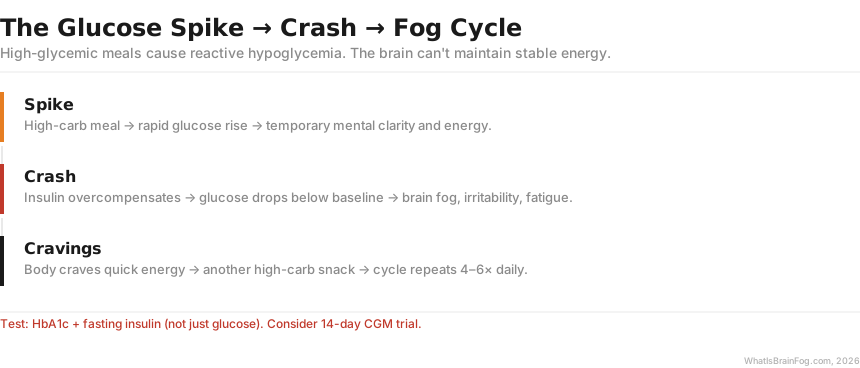
Use this when the story is clearly post-meal: quick rise, overshoot, then fog, cravings, or shakiness 1 to 4 hours later.
Comparison Chart
Reactive Hypoglycemia vs Prediabetes vs Type 2 Diabetes
A side-by-side chart for the lab pattern, timing pattern, and first-test differences that patients usually want clarified.
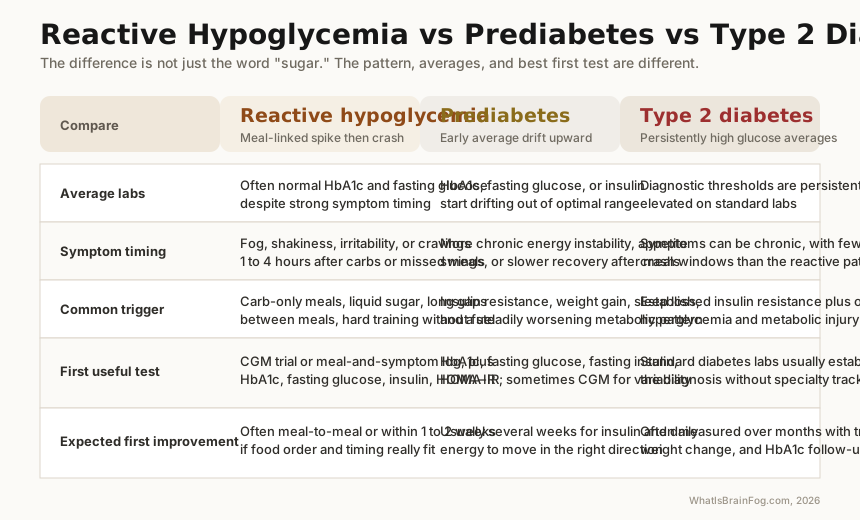
This clarifies the differential. Normal average labs do not rule out meal-linked glucose variability.
Cause Visual
Sugar Pattern Map
Pattern-focused visual for Sugar with mechanism, timing, action, and clinician discussion cues.
How Sugar Disrupts Clear Thinking
Blood-sugar-related fog often feels shaky, weak, foggy, or irritable around meals or missed meals. Some people get sleepy and flattened after eating; others get worse when they wait too long to eat. The useful question is whether the timing is metabolically patterned.
What this pattern often feels like
These community-grounded clues are here to help you recognize the shape of the pattern. They are not a diagnosis.
Blood-sugar-related fog usually has a strong timing signature around meals, fasting, crashes, or a narrow set of meal types.
Differentiator question: Does the fog predictably cluster after meals, after missed meals, or during a crash-like window that food timing changes can influence?
Blood sugar instability may be central, but cortisol, gut reactivity, poor sleep, and hormonal factors can mimic or worsen the same pattern.
What Sugar Brain Fog Usually Feels Like
The timing and physical feel matter more than the label. Post-meal fog and missed-meal fog are often different experiences.
Post-meal fog often feels like a wave of mental slowness, pressure behind the eyes, irritability, or shakiness 1 to 3 hours after a carb-heavy meal.
Missed-meal or fasting fog usually feels more diffuse: trouble concentrating, feeling hollow or wired, and a quick improvement after a balanced meal.
Crash-pattern fog often travels with cravings, sweating, tremor, or the sense that you need fast fuel immediately.
If the same meal timing keeps producing the same mental slowdown, that is a stronger clue than a one-off bad day.
This section is pattern-based and meant to help you describe the story more clearly, not self-diagnose from one symptom word.
Sugar Brain Fog Symptoms: How It Usually Shows Up
These are pattern signals, not proof by themselves. Use them to guide what to measure, compare, and discuss next.
Sugar can present with morning-heavy fog when sleep or overnight physiology is relevant.
Post-meal worsening can strengthen Sugar when metabolic or inflammatory triggers are involved.
Post-exertional worsening can increase confidence for Sugar when recovery capacity is reduced.
Track whether fog clusters 1-3 hours after meals, after exertion, or with posture change; pattern timing improves differential accuracy.
Shaky/sweaty episodes plus cognitive slowdown can suggest glucose-instability overlap, but objective confirmation is required.
Normal or near-normal average labs can coexist with high variability; do not conclude from one number alone.
What to Try This Week for Sugar
- 1
The 'food order hack': eat protein and fat FIRST, vegetables second, carbohydrates LAST at every meal. This single change reduces glucose spikes 30-40% without changing WHAT you eat. Add a 10-minute walk after meals to further reduce post-meal glucose excursions, especially after carbohydrate-heavy evening meals.
Start with one high-yield change before adding complexity.
- 2
Take a 10-minute walk after your biggest carbohydrate-containing meal for the next 7 days.
Use movement as a meal-linked glucose experiment, not just generic exercise.
Is Sugar Brain Fog Reversible?
Blood sugar-related brain fog is highly reversible with dietary and lifestyle changes. Reactive hypoglycemia and post-meal glucose spikes respond rapidly to meal composition changes. More advanced insulin resistance takes longer but is still improvable.
Typical timeline: Food order hack: next meal. Post-meal walking: immediate effect on that meal. Consistent low-glycemic eating: 2-4 weeks for noticeable pattern change. Insulin resistance improvement: 2-3 months with diet + exercise.
Factors that affect recovery:
- Severity of insulin resistance (pre-diabetes vs established diabetes)
- Dietary consistency (sporadic changes give sporadic results)
- Exercise (walking after meals is one of the most effective interventions)
- Sleep quality (poor sleep worsens glucose control)
- Meal timing and composition (protein first, fiber, avoid isolated carbs)
Source: Shukla et al., Diabetes Care, 2015; Reynolds et al., Diabetologia, 2016
What to Do While You Are Sorting This Out
Use the waiting period to collect cleaner signal, not to add complexity for its own sake.
Run one simple experiment at a time
Keep the next 7 to 14 days boring: protein-first meals, no liquid sugar, steadier meal timing, and a short post-meal walk. If everything changes at once, you lose the pattern.
Track timing, not just foods
Write down meal time, symptom time, and what the fog felt like. Timing is what separates reactive crashes from generic fatigue.
Use CGM data carefully
A short CGM trial can help if the story is strong, but if constant checking makes you more anxious or compulsive around food, stop and review it with a clinician instead of white-knuckling through the data. CBT-style health-anxiety support can be useful here.
When to Bring This to a Clinician
Self-experiments are reasonable for mild patterns. Safety issues, severe crashes, or mismatched labs are the point to escalate.
Driving, work safety, or near-fainting crashes
If the pattern is strong enough to affect driving, operating equipment, or functioning safely at work, this should move out of the self-tracking bucket.
Pregnancy, gestational-diabetes risk, or severe shakiness
Pregnancy changes the threshold for waiting. Bring the pattern to your obstetric or primary-care team early rather than treating it as a lifestyle puzzle.
Normal averages that do not match how you feel
If HbA1c and fasting glucose look fine but the timing pattern is obvious, ask for a broader metabolic conversation instead of accepting the first reassuring average marker.
Hormonal and Life-Stage Overlaps Worth Noticing
Some groups have stronger overlap with insulin resistance and meal-linked glucose variability than the average patient.
PCOS
If you have PCOS, irregular cycles, or known insulin resistance, sugar-related fog deserves a lower threshold for investigation because the metabolic overlap is strong.
Perimenopause and menopause
Hormonal transition can worsen insulin sensitivity. New post-meal crashes, cravings, or heavy afternoon fog in the 40s or 50s should not be written off as aging alone.
Teens and young adults living on convenience carbs
You do not need diabetes to get a spike-crash pattern. Highly processed carb-heavy eating with long gaps between meals is enough to create a repeatable fog cycle.
Best Diet Approach for Blood Sugar Brain Fog
Primary Option
Steady Meals - No Fasting
For conditions where blood sugar stability or regular energy intake is critical. Anti-crash eating.
Eat every 3-4 hours. Never skip meals. Protein + fat + complex carb at every meal. No intermittent fasting. No caffeine on empty stomach. Protein FIRST at each meal (stabilizes glucose). Light snack before bed if morning fog is an issue.
Protein FIRST at every meal (eat the eggs/chicken before the toast/rice). Walk 10 min after meals. Don't skip meals. These three habits flatten glucose curves more than any supplement. Consider a CGM for 2 weeks to see YOUR patterns.
Open primary diet pattern →How to Talk to Your Doctor About Blood Sugar and Brain Fog
Suggested Script
"I want to systematically evaluate whether Sugar is contributing to my brain fog and compare it against close alternatives."
Tests To Discuss
- • Blood Sugar Assessment
- • A1c + fasting glucose context review
Differentiator Questions
- • How is reactive hypoglycemia different from diabetes if my average labs look normal?
- • Does your pattern fit Sugar more consistently than Sleep Apnea when timing, triggers, and recovery are compared side-by-side?
- • Does your pattern fit Sugar more consistently than Meds when timing, triggers, and recovery are compared side-by-side?
Quiet next step
Get the doctor handout for this pattern
Get the printable doctor handout for this pattern and keep the next steps in one place. No funnel, just the handout and a quiet email reminder if you want it.
Metabolic Lens
Primary overlapThis cause is a direct metabolic lens. Story timing around meals, symptom clustering, and objective glucose context can materially change ranking confidence.
- Fog episodes that cluster in repeatable timing windows (meal, exertion, posture, or sleep-pattern linked).
- Energy or clarity drops that feel abrupt rather than uniformly low all day.
- Symptom overlap with sleep, autonomic, anxiety, or medication factors.
These pattern clues can raise suspicion but are not diagnostic on their own; confirmation requires clinician-guided evaluation and objective data.
8 Evidence-Based Insights About Sugar and Brain Fog
Your brain runs on glucose, but it hates the roller coaster. Spike → crash → fog. Reactive hypoglycemia after high-carb meals is extremely common and causes the predictable 'afternoon slump.' You don't need to be diabetic. You just need to stop eating carbs naked.
Evidence grades: A = strong human evidence, B = moderate evidence, C = preliminary or small-study evidence. Full grading guide
1 THE FOOD ORDER TEST: At your next meal, eat protein and vegetables FIRST, carbs LAST.
▼
THE FOOD ORDER TEST: At your next meal, eat protein and vegetables FIRST, carbs LAST.
Compare your energy 2 hours later to meals where you eat carbs first. Same food, different order, 30-40% lower glucose spike. Try it today.
Shukla et al., Diabetes Care 2015 DOI ↗
2 Reactive hypoglycemia is the crash after the spike.
▼
Reactive hypoglycemia is the crash after the spike.
Eat high-carb meal → blood sugar rockets → insulin overcompensates → blood sugar crashes below baseline → brain starves → fog, shakiness, irritability. This happens to non-diabetics constantly.
Cryer et al., J Clin Endocrinol Metab 2009
3 THE POST-MEAL WALK TEST: After your next carb-heavy meal, walk for 10 minutes.
▼
THE POST-MEAL WALK TEST: After your next carb-heavy meal, walk for 10 minutes.
Compare your 2-hour energy to a meal without walking. Muscle contraction clears glucose from blood independently of insulin, and post-meal walking meaningfully reduces glucose excursions, especially after evening carbohydrate loads.
Reynolds et al., Diabetologia 2016
4 Your brain uses 20% of your body's glucose but has no storage.
▼
Your brain uses 20% of your body's glucose but has no storage.
It needs constant, steady supply. The spike-crash cycle starves your brain repeatedly. Stable blood sugar = stable cognition.
Mergenthaler et al., Trends Neurosci 2013
5 THE CGM REVELATION: Consider a 14-day continuous glucose monitor trial (Dexcom, Libre).
▼
THE CGM REVELATION: Consider a 14-day continuous glucose monitor trial (Dexcom, Libre).
Watching real-time glucose after different foods is life-changing. Many people discover their 'healthy' oatmeal spikes them more than a cookie.
Zeevi et al., Cell 2015
6 Write this down for your doctor: 'I need HbA1c, fasting glucose, AND fasting insulin.
▼
Write this down for your doctor: 'I need HbA1c, fasting glucose, AND fasting insulin.
I want to catch insulin resistance early. Normal glucose with high insulin is early metabolic dysfunction.'
ADA Standards of Care 2025
7 THE 3PM AUDIT: When does your fog peak?
▼
THE 3PM AUDIT: When does your fog peak?
If it's mid-afternoon, 2-3 hours after lunch, this is likely post-meal reactive hypoglycemia. Track for 5 days. If the pattern is consistent, blood sugar management is your answer.
Cryer et al., J Clin Endocrinol Metab 2009
8 Blood sugar fog is FIXABLE.
▼
Blood sugar fog is FIXABLE.
Unlike some causes of brain fog, this one responds rapidly to simple changes. Food order, movement, avoiding liquid sugar - improvement often happens within days. This is low-hanging fruit.
Shukla et al., Diabetes Care 2015
View all 8 citations ▼
- Shukla et al., Diabetes Care 2015 doi:10.2337/dc15-0429
- Cryer et al., J Clin Endocrinol Metab 2009
- Reynolds et al., Diabetologia 2016
- Mergenthaler et al., Trends Neurosci 2013
- Zeevi et al., Cell 2015
- ADA Standards of Care 2025
- Cryer et al., J Clin Endocrinol Metab 2009
- Shukla et al., Diabetes Care 2015
Common Questions About Sugar Brain Fog
Based on clinical evidence and community insights. Use these as discussion prompts with your doctor, not self-diagnosis.
1. Can sugar cause brain fog? ▼
Yes. The useful question is not whether you ate sugar once, but whether your brain fog follows a glucose pattern. Blood sugar instability can impair thinking through two different paths: acute drops can cause neuroglycopenic symptoms within minutes to hours, while chronically elevated glucose contributes to inflammatory and glycation-related injury over time. The strongest clue is timing around meals, fasting windows, and crash-like episodes.
2. What does sugar brain fog usually feel like? ▼
Post-meal sugar brain fog often feels like a wave of mental slowness 1 to 3 hours after a carbohydrate-heavy meal, sometimes with fatigue, irritability, shakiness, sweating, or a need to eat again quickly. Fasting-related fog usually feels more diffuse: poor concentration when meals are delayed, morning heaviness, or a crash that improves after a balanced meal. The timing pattern matters more than any single symptom word.
3. What should I try first if I think sugar is involved? ▼
Start with the highest-yield no-cost changes: eat protein and vegetables before carbohydrate, stop drinking liquid sugar, and take a short walk after meals. Those experiments are useful because they can change symptoms quickly if glucose variability is really part of the story. If nothing changes after 1 to 2 weeks of consistent meal timing and balanced meals, blood sugar usually should move down the differential.
4. What tests should I discuss for sugar brain fog? ▼
For a first-pass workup, discuss HbA1c, fasting glucose, fasting insulin, and HOMA-IR together rather than HbA1c alone. If symptoms are clearly meal-linked but averages are normal, ask how your clinician wants to evaluate variability: a 2-week CGM trial, a longer meal-and-symptom log, or in select cases a more formal glucose challenge workflow. The point is to match the test to the timing pattern.
5. When is sugar brain fog an emergency? ▼
Treat this as urgent rather than a self-tracking problem if the cognitive change is sudden over hours or days, comes with weakness, numbness, vision or speech changes, new seizures, fever with confusion, or a clearly progressive decline. Those patterns are not explained safely by ordinary glucose variability alone and need immediate medical evaluation instead of diet experiments.
6. How is reactive hypoglycemia different from diabetes? ▼
In diabetes, HbA1c and fasting glucose are elevated on standard labs often enough to meet diagnostic thresholds. In reactive hypoglycemia, average labs can be normal because the problem is the spike-crash cycle after meals rather than persistently high averages. That is why a symptom log, CGM pattern, or broader metabolic panel can matter more than a single reassuring HbA1c when the timing story is strong.
7. What is reactive hypoglycemia and is it the same as low blood sugar? ▼
Reactive hypoglycemia means a blood sugar drop after a meal, usually 1 to 4 hours after a high-carbohydrate load. It is a form of low-blood-sugar symptom pattern, but in real life many people feel the crash before a standard lab ever catches a dramatic low. That is why the timing of symptoms after meals matters so much, and why normal fasting labs can miss the problem entirely.
8. Can I use a CGM without being diabetic? ▼
Usually yes in the United States, depending on the device and access route. A short CGM trial can be useful when standard averages look normal but the meal-linked timing is persuasive. The point is not obsessive self-monitoring; it is to look for repeatable patterns such as sharp post-meal excursions, time below range, or the exact meals that reliably trigger your fog. If the data just increases anxiety, stop and review it with a clinician.
9. How quickly can I tell whether this path is helping? ▼
Some changes are fast enough to notice within a meal or a day: food order, liquid-sugar removal, and post-meal walking can all change how the next carbohydrate-heavy meal feels. The bigger markers move more slowly. Reactive hypoglycemia patterns often settle over 1 to 2 weeks of consistent meal timing, while fasting insulin and HbA1c improve on a slower timeline. Use the fast feedback to judge direction, not to declare the job finished.
10. When should I take this to a clinician instead of self-tracking? ▼
Escalate when the pattern is strong but not improving, when the crashes are severe enough to affect driving or work safety, when pregnancy is part of the picture, or when you keep getting reassured by normal averages that do not match how you feel. Bring a trigger log, meal timing notes, supplements or medications, and any prior HbA1c, glucose, insulin, or CGM data. That makes the visit far more useful than arriving with a vague suspicion.
📖 Glossary of Terms (6 terms) ▼
Reactive hypoglycemia
A post-meal spike-crash pattern where symptoms such as shakiness, irritability, and brain fog appear 1 to 4 hours after eating.
Neuroglycopenic
Symptoms caused by the brain not getting enough usable glucose, such as confusion, slowed thinking, or difficulty concentrating.
Glycation
A chemical process where excess glucose sticks to proteins and tissues, contributing to long-term metabolic and vascular damage.
Postprandial
Occurring after a meal. Postprandial fog means symptoms that reliably worsen after eating.
Insulin resistance
A metabolic state where the body needs more insulin to handle glucose. It often shows up before fasting glucose becomes abnormal.
CGM
Continuous glucose monitor. A wearable sensor that shows glucose trends in near real time and can reveal variability that HbA1c misses.
Related Articles
When to Seek Urgent Help
STOP - Seek urgent medical evaluation if: sudden onset of cognitive symptoms (hours/days), new focal neurological symptoms (weakness, numbness, vision or speech changes), seizures, fever with confusion, or rapidly progressive decline. These may indicate a medical emergency requiring immediate care, not lifestyle modification.
Deep Dive
Clinical Fit + Advanced Detail
▼
Deep Dive
Clinical Fit + Advanced Detail
How This Cause Is Evaluated
The analyzer ranks all 66 causes, but this page shows the exact clues that strengthen or weaken Sugar so your next steps stay logical.
Direct Evidence Needed
- ✓ Story language directly matches a recurring Sugar pattern rather than broad fatigue alone.
- ✓ Symptoms recur with a repeatable trigger/timing pattern that is physiologically plausible for Sugar.
Supporting Clues
- + Context clues (history, exposures, or coexisting conditions) support Sugar as a priority hypothesis. (weight 7/10)
- + At least two independent signals point in the same direction without strong contradiction. (weight 6/10)
- + Response to relevant interventions tracks closer with Sugar than with Diabetes. (weight 5/10)
What Lowers Confidence
- − A competing cause (Diabetes) has stronger direct evidence in the story.
- − Core expected signals for Sugar are missing across history, timing, and triggers.
Timing Patterns That Strengthen This Fit
Worse in the morning
Sugar can present with morning-heavy fog when sleep or overnight physiology is relevant.
After-meal worsening
Post-meal worsening can strengthen Sugar when metabolic or inflammatory triggers are involved.
Worse after exertion
Post-exertional worsening can increase confidence for Sugar when recovery capacity is reduced.
Differentiate From Similar Causes
Question to ask
Does your pattern fit Sugar more consistently than Diabetes when timing, triggers, and recovery are compared side-by-side?
▼
Question to ask
Does your pattern fit Sugar more consistently than Diabetes when timing, triggers, and recovery are compared side-by-side?
If yes: Pattern consistency is stronger for Sugar.
If no: Pattern consistency is stronger for Diabetes.
Compare with Diabetes → Question to ask
Does your pattern fit Sugar more consistently than Sleep Apnea when timing, triggers, and recovery are compared side-by-side?
▼
Question to ask
Does your pattern fit Sugar more consistently than Sleep Apnea when timing, triggers, and recovery are compared side-by-side?
If yes: Pattern consistency is stronger for Sugar.
If no: Pattern consistency is stronger for Sleep Apnea.
Compare with Sleep Apnea → Question to ask
Does your pattern fit Sugar more consistently than Meds when timing, triggers, and recovery are compared side-by-side?
▼
Question to ask
Does your pattern fit Sugar more consistently than Meds when timing, triggers, and recovery are compared side-by-side?
If yes: Pattern consistency is stronger for Sugar.
If no: Pattern consistency is stronger for Meds.
Compare with Meds →How People Describe This Pattern
- • My most prominent issues are crash after eating and foggy after carbs.
- • I also struggle significantly with hangry.
- • These symptoms feel like a repeatable pattern that affects my cognition.
Often Confused With
Diabetes
OpenSugar and Diabetes can both present as fatigue + concentration problems when story detail is sparse.
Key question: When timing and trigger details are compared directly, which pattern fits better: Sugar or Diabetes?
Sleep Apnea
OpenSugar and Sleep Apnea can both present as fatigue + concentration problems when story detail is sparse.
Key question: When timing and trigger details are compared directly, which pattern fits better: Sugar or Sleep Apnea?
Meds
OpenSugar and Meds can both present as fatigue + concentration problems when story detail is sparse.
Key question: When timing and trigger details are compared directly, which pattern fits better: Sugar or Meds?
Use This Page With the Story Analyzer
Use this starter to run a focused check while still comparing all 66 causes:
"I want to check whether Sugar could explain my brain fog. My most relevant symptoms are crash after eating, foggy after carbs, and it gets worse with high carb meals, sugar."
Map My Pattern for SugarBiomarkers and Tests
Blood Sugar Assessment
- HbA1c (optimal <5.5% - 'normal' <5.7% still means 96 million prediabetics are missed)
- Fasting glucose (optimal 70-85 mg/dL)
- Fasting insulin (optimal <5 μIU/mL - this catches insulin resistance YEARS before glucose rises)
- HOMA-IR (calculate from fasting glucose + insulin)
Doctor Conversation Script
Bring concise evidence, request specific tests, and agree on rule-out criteria.
Initial Visit
"I want to systematically evaluate whether Sugar is contributing to my brain fog and compare it against close alternatives."
Key points to emphasize
- • Please document what findings would confirm this cause versus lower confidence.
- • I want fasting insulin ordered alongside fasting glucose and HbA1c.
- • Please note which competing causes should be checked in parallel if results are inconclusive.
- • If HbA1c, fasting glucose, fasting insulin, HOMA-IR, and a 2-week CGM trial are all unrevealing, blood sugar is probably not the primary driver.
Tests to discuss
Blood Sugar Assessment
Used to rule in or rule out Sugar.
A1c + fasting glucose context review
Average metrics can miss clinically relevant variability patterns.
Supplements — What the Evidence Says
Supplements are adjuncts, not replacements for lifestyle changes. Discuss with your healthcare provider.
Berberine (if prediabetic and not on metformin)
Dose: 500mg 2-3x daily with meals
Diet and exercise changes first. Berberine has metabolic evidence in type 2 diabetes populations, but it is a supplement, not a replacement for lifestyle or prescribed therapy. Discuss it with your doctor before adding it if you take other medications.
Evidence: Moderate - Yin et al., Metabolism, 2008: pilot RCT in type 2 diabetes
Yin et al., Metabolism, 2008
Psychological Support and Therapy
Not typically therapy-first. If binge eating or disordered relationship with food → eating disorder specialist. If diabetes distress → diabetes-specific counseling.
Not sure this is your cause?
Brain fog can have many causes. The story analyzer can help narrow down what pattern fits best for you.
About This Page
Written by
Dr. Alexandru-Theodor Amarfei, M.D.Medical reviewer and clinical content lead for the What Is Brain Fog cause library
Research methodology
Evidence-based approach using peer-reviewed sources
View our evidence grading standardsLast updated: . We review our content regularly and update when new research emerges.
Important: This content is for educational purposes only and does not replace professional medical advice. Consult a qualified healthcare provider for diagnosis and treatment.
Claim-Level Evidence
- [A] HbA1c reflects average glucose and can miss high variability or intermittent lows; CGM-style metrics can add context when symptoms are pattern-based. medium/validated
- [B] Meal sequence (protein/vegetables before carbohydrate) can reduce postprandial glucose excursions in many patients. medium/validated
- [A] Hypoglycemia can produce neuroglycopenic cognitive symptoms and should be evaluated using objective clinical workflows when suspected. medium/validated
- [A] Prediabetes and diabetes thresholds are defined by established A1c and glucose ranges; these are risk and diagnosis anchors, not complete explanations for symptoms. medium/validated
- [C] Pattern-focused visual summary for Sugar intended to support structured, non-diagnostic investigation planning. low/validated