Thyroid and Brain Fog
Guideline: NICE NG145 Thyroid Disease (2019, surveillance 2024)
Medically reviewed by Dr. Alexandru-Theodor Amarfei, M.D.
First published
Quick Answer
Thyroid can contribute to brain fog, especially when the pattern feels globally slowed rather than crash-like. The most useful clues are heavy mornings, cold intolerance, constipation, hair or skin change, and a thyroid workup that goes beyond one isolated TSH value.
79.2% of hypothyroid patients report frequent brain fog
Survey of 5,170 patients: 46.6% said brain fog was present before diagnosis. Fog was most commonly associated with fatigue (96.2%), forgetfulness (85.0%), sleepiness (81.8%), and difficulty focusing (78.4%). A separate fMRI study found measurable network changes in subclinical hypothyroidism.
— Survey: Ettleson et al. Endocr Pract. 2022; Imaging: Göbel et al. Psychoneuroendocrinology. 2019
Key Takeaways: Thyroid and Brain Fog
Fast read- 1
Thyroid fog usually feels slowed and heavy rather than jittery or crash-based.
- 2
Morning timing matters for repeat TSH testing because thyroid markers vary across the day.
- 3
A practical thyroid workup often includes antibodies, ferritin, B12, and vitamin D, not just TSH alone.
- 4
Medication timing and absorption problems can look like treatment failure.
- 5
Iron deficiency, sleep apnea, postpartum changes, menopause, and anxiety commonly overlap with thyroid stories.
- 6
Combination T4/T3 therapy remains a specialist-level discussion because the evidence is mixed.
Historical Context
Latest Developments in Thyroid Brain Fog
These are the more useful recent papers for patients and clinicians. They do not overturn the basics, but they do sharpen where the real gaps still are: persistent symptoms, formulation and timing problems, autoimmune context, aging, and overconfident treatment expectations.
▼
Historical Context
Latest Developments in Thyroid Brain Fog
These are the more useful recent papers for patients and clinicians. They do not overturn the basics, but they do sharpen where the real gaps still are: persistent symptoms, formulation and timing problems, autoimmune context, aging, and overconfident treatment expectations.
AACE year-in-review puts thyroid, aging, pregnancy, and autoimmunity back in the foreground
The 2026 Endocrine Practice year-in-review highlights how much current thyroid management is being shaped by aging physiology, pregnancy and postpartum issues, autoimmune thyroid disease, and practical treatment optimization rather than by a single new miracle therapy.
Hashimoto's reviews are becoming more management-focused, not just mechanism-focused
A 2026 Frontiers review emphasizes that Hashimoto's care is still mainly about antibodies, ultrasound context, levothyroxine replacement, and overlap management. That supports using autoimmune context to explain the story without overselling speculative brain-attack claims in routine cases.
ETA issued practical levothyroxine monotherapy guidance with more attention to real-world barriers
The 2025 ETA guideline focuses on the barriers that make levothyroxine fail in real life: meal timing, interacting medications, gastrointestinal issues, adherence, and when liquid or softgel formulations make sense. This is one of the most useful updates for patients who say the medication should work but does not.
Quality-of-life impairment remains real even after standard treatment
A 2025 systematic review and meta-analysis found that quality of life often remains impaired in treated hypothyroidism. That strengthens the page's stance that persistent fog is not automatically imaginary or explained by the TSH being normal.
Combination therapy still looks selective, not routine
A 2025 long-term real-world follow-up of LT4/LT3 users found that some patients report durable quality-of-life benefit, but many still have symptoms and a sizeable fraction were biochemically overtreated. This supports a specialist-only, risk-aware conversation rather than blanket enthusiasm.
New meta-analysis puts harder numbers on neurocognitive impairment in hypothyroidism
The 2025 Pankowski meta-analysis pooled 85 studies and estimated that neurocognitive impairment is common enough to matter clinically, while also showing links between thyroid levels and testing performance. This is the strongest modern paper for integrating cognition into thyroid care rather than treating it as an afterthought.
Formulation choice is now a real management lever, not just a pharmacy detail
A 2025 systematic review found that liquid and softgel levothyroxine taken with meals can preserve efficacy better than tablets and may improve adherence and perceived quality of life. This matters most in patients whose mornings are chaotic or whose tablets keep colliding with coffee, calcium, iron, or PPIs.
Liquid levothyroxine keeps getting more practical timing data
A controlled bioavailability study showed that one levothyroxine oral solution had similar absorption whether taken 15 or 30 minutes before a high-fat meal. It does not mean everyone should switch, but it is highly relevant for patients who fail the standard tablet routine because of adherence or absorption barriers.
Mechanism overlap
Mechanisms this cause often overlaps with
These are explanation lenses, not diagnosis certainty. If this cause fits, these mechanisms can help explain why the pattern looks the way it does.
hormonal endocrine signaling
Hormonal & Endocrine Signaling
Thyroid, sex hormones, cortisol rhythm, and cycle-linked shifts can change clarity, stamina, and mood in patterned ways.
What would weaken it: No cycle, thyroid, or life-stage signal.
nutrient oxygen depletion
Nutrient or Oxygen Delivery Depletion
Low iron, B12, folate, or other depletion states can lower cognitive stamina, especially when fatigue and exercise intolerance travel with fog.
What would weaken it: No fatigue or low-reserve pattern.
If You Do ONE Thing Today
Get a FULL thyroid panel (TSH, Free T3, Free T4, TPO antibodies) - not just TSH - tested fasting before 10am
TSH is a good first screen, but when symptoms don't match results, the full panel can add useful context. In a survey of 5,170 patients, 46.6% reported brain fog before their thyroid condition was diagnosed. TSH varies significantly throughout the day, so timing matters. When the clinical story still fits, a broader panel can help clarify patterns that TSH alone may miss.
See 5 research sources ▼
- Ettleson MD et al. Brain Fog in Hypothyroidism: Understanding the Patient's Perspective. Endocr Pract. 2022;28(3):257-264 [DOI] [PubMed]
- Samuels MH, Bernstein LJ. Brain Fog in Hypothyroidism: What Is It, How Is It Measured, and What Can Be Done About It. Thyroid. 2022;32(7):752-763 [DOI] [PubMed]
- Pasqualetti G et al. Subclinical Hypothyroidism and Cognitive Impairment: Systematic Review and Meta-Analysis. J Clin Endocrinol Metab. 2015;100(11):4240-4248 [DOI] [PubMed]
- Jonklaas J et al. Guidelines for the Treatment of Hypothyroidism (ATA Guidelines). Thyroid. 2014;24(12):1670-1751 [DOI] [PubMed]
- Andersen S et al. Narrow Individual Variations in Serum T4 and T3 in Normal Subjects. J Clin Endocrinol Metab. 2002;87(3):1068-1072 [DOI] [PubMed]
When to expect improvement
Testing: 1-2 weeks. Treatment: 4-8 weeks for levothyroxine to stabilize.
If no improvement after this timeframe, it's worth exploring other possibilities.
Is Thyroid Brain Fog Reversible?
Yes, thyroid-related brain fog is typically reversible with proper treatment. Once thyroid hormone levels are optimized, most people experience significant cognitive improvement. The brain requires adequate thyroid hormone for normal function, and replacing what's missing restores that function.
Visual Guides
Panel Guide
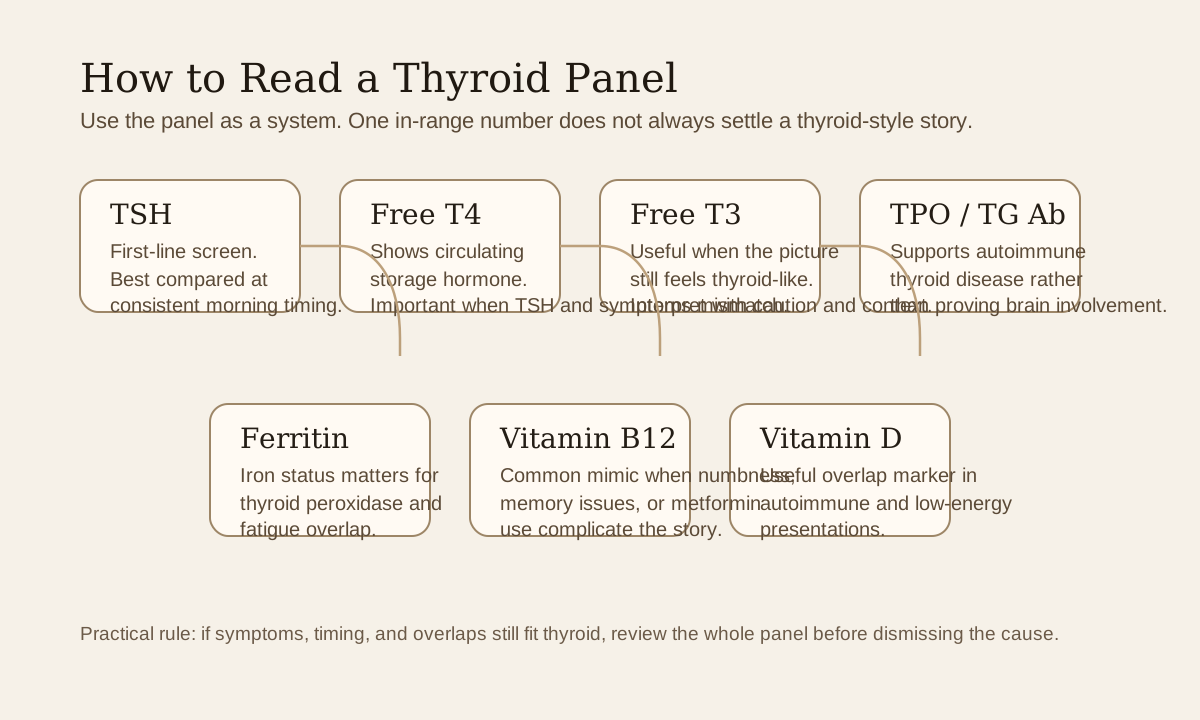
How to Read a Thyroid Panel
A visual explainer of what TSH, free T4, free T3, antibodies, ferritin, B12, and vitamin D are doing on this page.
Pattern Comparison
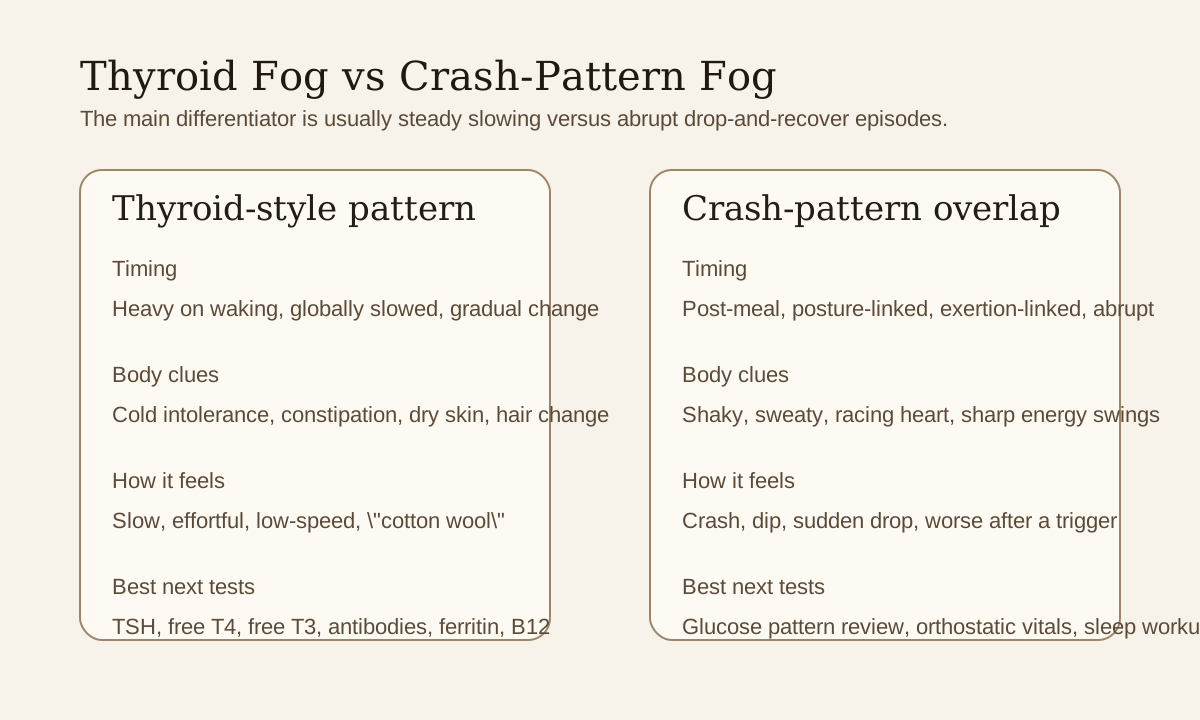
Thyroid Fog vs Crash-Pattern Fog
A side-by-side comparison of the slow, steady thyroid pattern versus sugar-crash or autonomic patterns.
Understanding Your Thyroid Panel Results
Interpret the thyroid panel as a system, not as one isolated number. Timing, antibodies, medication timing, and overlap conditions all change what a borderline result means.
TSH
Useful first-line screen, but easier to compare when drawn at a consistent morning time.
Free T4 and Free T3
These help explain why symptoms and TSH sometimes do not line up neatly.
TPO and TG antibodies
These support an autoimmune thyroid diagnosis and help explain why the picture may persist even when the hormone story looks incomplete.
Ferritin, B12, and Vitamin D
These are common overlap markers because iron and nutrient deficiency can mimic or worsen thyroid-style fatigue and fog.
Practical Tool
Thyroid Next-Step Chooser
Pick the version of the thyroid story that sounds closest. The goal is to avoid random escalation and move to the next useful test or discussion.
Before assuming the dose is wrong, check the boring-but-high-yield problems: coffee timing, iron or calcium overlap, PPIs, inconsistent brands, and whether the blood draw happened after the dose instead of before it.
What to do next
- • Take levothyroxine the same way every day and review coffee, calcium, iron, soy, and PPI timing.
- • If mornings are chaotic or PPI use is unavoidable, ask whether liquid or softgel LT4 is worth discussing instead of guessing at the dose.
- • When repeating labs, draw before the morning dose or after a clearly documented interval so the result is interpretable.
Best handoff pages
Cause Visual
Thyroid Pattern Map
Pattern-focused visual for Thyroid with mechanism, timing, action, and clinician discussion cues.
What Happens When Thyroid Meets Your Brain
Thyroid-related fog often comes with slowing: slower thinking, slower speech, heavier mornings, cold intolerance, constipation, dry skin, hair shedding, and a sense that everything takes more effort than it used to.
What this pattern often feels like
These community-grounded clues are here to help you recognize the shape of the pattern. They are not a diagnosis.
Thyroid-related fog usually presents as cognitive slowing, heavy mornings, and broader metabolic slowing rather than a jittery or crash-prone pattern.
Differentiator question: Does the fog come with slowing, cold intolerance, constipation, dry skin, hair shedding, or a sense that your whole system is running low?
Thyroid dysfunction may be central, but iron status, autoimmunity, sleep apnea, or hormonal shifts can produce a similar pattern.
Thyroid Brain Fog Symptoms: How It Usually Shows Up
These are pattern signals, not proof by themselves. Use them to guide what to measure, compare, and discuss next.
Heavy, slowed thinking on waking that can take hours to clear is a common thyroid-style story
An all-day slowed pattern fits thyroid better than a sharp crash-and-recover pattern
If the fog is mainly post-meal, posture-linked, or dramatically better after sleep recovery, thyroid may not be the lead theory
Cold intolerance, constipation, dry skin, hair shedding, and slowed speech make a thyroid explanation more plausible
What to Try This Week for Thyroid
- 1
Request a full panel (TSH, free T3, free T4, TPO antibodies) if symptoms persist after initial TSH testing. When TSH is normal but symptoms continue, additional tests can reveal subclinical patterns. Start a symptom log noting fog severity, time of day, and energy levels - this helps your doctor see the full picture.
Start with one high-yield change before adding complexity.
- 4
Use hydration as basic symptom support, especially if constipation is part of the picture. Increase water and fiber together rather than treating hydration as a thyroid-specific fix.
Weekly focus: Hydration.
- 5
If cold intolerance is part of the story, treat it as a real symptom cue. Also stop biotin for several days before thyroid bloodwork because assay interference can distort the result.
Weekly focus: Environment.
- 6
In the Ettleson survey, the patient-doctor relationship was a major concern. Finding a doctor who takes thyroid fog seriously is itself therapeutic. Visibility reduces isolation.
Weekly focus: Connection.
- 7
Track symptoms alongside the timing of medication, meals, sleep, and repeat labs. Most dose changes are assessed after 6 to 8 weeks rather than day to day.
Weekly focus: Tracking.
Is Thyroid Brain Fog Reversible?
Yes, thyroid-related brain fog is typically reversible with proper treatment. Once thyroid hormone levels are optimized, most people experience significant cognitive improvement. The brain requires adequate thyroid hormone for normal function, and replacing what's missing restores that function.
Typical timeline: Initial improvement often begins within 2-4 weeks of starting or optimizing thyroid hormone replacement. Full cognitive recovery may take 3-6 months as the body adjusts and stabilizes.
Factors that affect recovery:
- Accuracy of thyroid hormone dosing (some people need T3 in addition to T4)
- Duration of untreated hypothyroidism (longer untreated periods may require longer recovery)
- Autoimmune activity (Hashimoto's flares can cause temporary worsening)
- Iron, B12, and vitamin D status (deficiencies can mimic or worsen thyroid symptoms)
Source: Bauer M et al., Mol Psychiatry 2023; ATA/AACE Guidelines 2024
When to See a Doctor About Thyroid Brain Fog
Self-tracking is useful for a short first pass, but persistent thyroid-pattern fog usually deserves proper testing and medication review.
Book a visit soon
If the fog is persistent, function is dropping, or the story includes cold intolerance, constipation, hair change, weight shift, postpartum timing, or a strong family autoimmune history.
Bring this with you
Bring a symptom log, medication list, supplement list, prior thyroid labs, and the timing of your levothyroxine dose relative to food, coffee, calcium, and iron.
Escalate urgently
Do not self-manage sudden-onset confusion, focal neurologic symptoms, seizures, fever with confusion, or rapidly progressive decline.
Who to see
Primary care can start the workup. Endocrinology is usually the next stop for central hypothyroidism, pregnancy or postpartum complications, persistent symptoms despite treatment, or unclear antibody and replacement-therapy decisions.
Thyroid Brain Fog: Age and Context Notes
The meaning of borderline thyroid results changes with age, pregnancy status, and treatment stage.
Adults under 75
Subclinical hypothyroidism appears more relevant to cognition in younger-old adults than in the oldest-old, so age matters when deciding how aggressively to chase a borderline result.
Older adults
In adults over 75, the cognitive-risk signal from subclinical hypothyroidism is less consistent, which is one reason treatment decisions should stay individualized.
Pregnancy and postpartum
Pregnancy changes thyroid targets, and postpartum thyroiditis can cause a new fog pattern in the months after delivery. If the timing fits, say that explicitly during the workup.
Dose adjustment and overtreatment
A TSH driven too low by treatment can cause a different kind of cognitive and physical strain. If symptoms changed after dose escalation, overtreatment belongs in the differential.
Useful Next Links for Thyroid Brain Fog
If the thyroid pattern fits, these are usually the next pages people need instead of another generic health article.
Full thyroid function panel
A more useful starting point than repeating TSH alone.
Ferritin test guide
Iron deficiency can mimic or worsen thyroid-style fatigue and fog.
Vitamin B12 test guide
B12 deficiency is one of the most common thyroid mimics.
Vitamin D test guide
Useful overlap marker in autoimmune and fatigue-heavy stories.
Anemia cause page
Important overlap when ferritin, shortness of breath, or heavy fatigue dominate the story.
Doctor handout for thyroid
Use this when you want the visit to stay practical and organized.
Food Approach
Primary Option
Mediterranean / MIND Pattern
The most evidence-backed eating pattern for brain health. Not a diet - a way of eating.
Leafy greens daily, berries 3-5x/week, fatty fish 2-3x/week, olive oil as main fat, nuts/seeds daily, legumes 3-4x/week, whole grains. Minimal ultra-processed food, refined sugar, and seed oils.
No special thyroid diet has strong evidence. Mediterranean-style eating is a reasonable default. Selenium support should stay conservative because Brazil nut content varies widely, and iodine over-supplementation can worsen Hashimoto's. In confirmed Hashimoto's, a time-limited gluten-free trial can be discussed, but the evidence is still preliminary.
Open primary diet pattern →Alternative Options
Gentle Anti-Inflammatory (Recovery-Adapted)
For people who are too fatigued, nauseous, or overwhelmed for complex dietary changes. The minimum effective dose.
Small, frequent, simple meals. Broth/soup if appetite is poor. Add ONE portion of oily fish per week. Add berries when tolerable. Reduce (don't eliminate) ultra-processed food. Hydrate. Don't force large meals.
Open this option →Iron-Repletion Focus
For confirmed or suspected iron deficiency. Pair iron-rich foods with vitamin C. Separate from tea/coffee/dairy.
Iron-rich foods: red meat 2-3x/week, liver 1x/week (if tolerated), lentils, spinach, fortified cereals. ALWAYS pair with vitamin C (bell pepper, orange, kiwi, strawberry). Avoid tea/coffee within 1hr of iron-rich meals. Continue prenatal vitamins if postpartum.
Open this option →How to Talk to Your Doctor About Thyroid and Brain Fog
Suggested Script
"I've been experiencing persistent brain fog and fatigue for [DURATION]. I'd like to investigate thyroid contributors with a complete panel rather than relying on TSH alone, especially because the symptom pattern still looks thyroid-like."
Tests To Discuss
- • TSH
- • Free T3
- • Free T4
- • TPO Antibodies
- • TG Antibodies
Differentiator Questions
- • When you DO have energy, do you still enjoy activities you used to love?
- • Do you snore loudly or gasp/stop breathing during sleep?
- • Do you get short of breath or your heart races climbing stairs?
- • Is the fog globally slowed and constant, or is it mainly post-meal, posture-linked, or crash-like?
Quiet next step
Get the doctor handout for this pattern
Get the printable doctor handout for this pattern and keep the next steps in one place. No funnel, just the handout and a quiet email reminder if you want it.
How Thyroid Brain Fog Connects Across The Site
Protocol Guides
Clarity Code Factors
- Depletion
Nutrient, oxygen, or energy substrate deficits reduce cognitive reserve and day-to-day reliability.
- Dysregulation
Circadian, autonomic, or stress-regulation instability often drives fluctuating fog patterns.
Quick Summary: Thyroid Brain Fog Key Points
Informative- 1
Thyroid-related fog often comes with slowing: slower thinking, slower speech, heavier mornings, cold intolerance, constipation, dry skin, hair shedding, and a sense that everythin…
- 2
Worse in the morning: Thyroid hormone levels lowest in early morning, fog typically worst on waking
- 3
Persistent through the day: All-day constant fog consistent with systemic metabolic cause
- 4
Afternoon crash pattern: Less typical for thyroid - consider blood sugar or sleep causes
- 5
Persistent fatigue not explained by sleep quantity
- 6
Symptoms developed gradually over weeks/months (not sudden)
- 7
Always feeling cold when others are comfortable
- 8
Queen Anne sign - outer third of eyebrows thin/missing
- 9
Fog worse in morning, improving somewhat through day
- 10
Unexplained weight gain or difficulty losing weight
Metabolic Lens
Secondary overlapThyroid hormone helps set basal metabolic pace. When thyroid is the main driver, the fog usually feels globally slowed and steady rather than abrupt or crash-based.
- A more constant low-energy, low-speed pattern that often travels with cold intolerance, constipation, and dry skin.
- Heavy mornings and effortful thinking that improve only gradually, not in a clear sugar-crash rhythm.
- If the story is sharply post-meal, posture-linked, or shaky-sweaty, blood sugar or autonomic overlap deserves more weight.
These pattern clues can raise suspicion but are not diagnostic on their own; confirmation requires clinician-guided evaluation and objective data.
22 Evidence-Based Insights About Thyroid and Brain Fog
Your doctor says your thyroid is "fine." You can barely remember your own phone number. Something doesn't add up. Here's what they didn't tell you.
Evidence grades: A = strong human evidence, B = moderate evidence, C = preliminary or small-study evidence. Full grading guide
1 A In adults under 75, subclinical hypothyroidism has been associated with higher cognitive-risk signals in pooled data.
▼
In adults under 75, subclinical hypothyroidism has been associated with higher cognitive-risk signals in pooled data.
The effect was not seen the same way in older groups, which is why age and clinical context matter when deciding how much weight to give a borderline lab pattern.
Pasqualetti G et al. J Clin Endocrinol Metab. 2015;100(11):4240-4248 DOI ↗
2 B TSH follows a circadian pattern and is usually higher overnight and in the early morning than later in the day.
▼
TSH follows a circadian pattern and is usually higher overnight and in the early morning than later in the day.
If you are trending borderline and trying to compare repeat tests, using the same morning timing makes the result easier to interpret.
Andersen S et al. J Clin Endocrinol Metab. 2002;87(3):1068-1072 DOI ↗
3 C Hashimoto's is not just a gland problem.
▼
Hashimoto's is not just a gland problem.
Autoimmune thyroid disease can coexist with neurologic and inflammatory symptoms, although severe central-nervous-system involvement is uncommon and should be treated as a specialist problem rather than assumed from routine thyroid antibodies alone.
Churilov LP et al. Best Pract Res Clin Endocrinol Metab. 2019;33(6):101364 DOI ↗
4 C Much of the T3 available to the brain is generated locally from T4 by deiodinase activity in glial cells.
▼
Much of the T3 available to the brain is generated locally from T4 by deiodinase activity in glial cells.
That estimate comes mainly from animal work, but it helps explain why thyroid-brain symptoms do not always map neatly onto one single blood value.
Bernal J. Front Endocrinol. 2014;5:40 DOI ↗
5 B Proton-pump inhibitors and other low-acid states can reduce levothyroxine absorption because the tablet dissolves less predictably when stomach acidity is altered.
▼
Proton-pump inhibitors and other low-acid states can reduce levothyroxine absorption because the tablet dissolves less predictably when stomach acidity is altered.
If treatment suddenly seems less effective after starting reflux medication, absorption is worth reviewing before assuming the dose itself is wrong.
Liwanpo L, Hershman JM. Best Pract Res Clin Endocrinol Metab. 2009;23(6):781-792 DOI ↗
6 B Slow relaxation of the ankle jerk reflex, sometimes called Woltman sign, is a classic historical clue in hypothyroidism.
▼
Slow relaxation of the ankle jerk reflex, sometimes called Woltman sign, is a classic historical clue in hypothyroidism.
It is a teaching point more than a modern stand-alone diagnostic test, but it reminds clinicians that thyroid disease often shows up as generalized slowing.
Woltman HW. JAMA. 1929;93:1029-1030 DOI ↗
7 C Loss of the outer third of the eyebrows, sometimes called Queen Anne sign (Hertoghe sign), is a classic clinical clue that can occur in hypothyroidism.
▼
Loss of the outer third of the eyebrows, sometimes called Queen Anne sign (Hertoghe sign), is a classic clinical clue that can occur in hypothyroidism.
It predates modern lab testing, but it is not specific enough to diagnose thyroid disease on its own.
Ioannou S et al. QJM. 2023;116(12):1029 DOI ↗
8 D Older clinicians sometimes used a basal temperature pattern as a rough clue to low metabolic pace, but it is not a modern diagnostic test for hypothyroidism.
▼
Older clinicians sometimes used a basal temperature pattern as a rough clue to low metabolic pace, but it is not a modern diagnostic test for hypothyroidism.
If you consistently feel cold, fatigued, and foggy, that pattern is more useful as a prompt for proper testing than as a stand-alone measurement.
Barnes BO. JAMA. 1942;119(14):1072-1076 DOI ↗
9 A A 'normal' TSH does not always settle the whole clinical picture.
▼
A 'normal' TSH does not always settle the whole clinical picture.
Some patients with persistent symptoms may still need Free T4, and sometimes Free T3 and thyroid antibodies, interpreted in context rather than in isolation. If symptoms persist, discuss whether those additional tests would actually change management.
Jonklaas J et al. Thyroid. 2014;24(12):1670-1751 DOI ↗
10 B Iron status matters for thyroid physiology because thyroid peroxidase is an iron-dependent enzyme.
▼
Iron status matters for thyroid physiology because thyroid peroxidase is an iron-dependent enzyme.
A ferritin level that is technically within a lab reference range can still be functionally low enough to complicate symptoms, which is why ferritin often belongs in the workup when fatigue and fog persist.
Hess SY. Thyroid. 2010;20(8):907-913 DOI ↗
11 A Levothyroxine absorption is sensitive to timing and to what is taken around it.
▼
Levothyroxine absorption is sensitive to timing and to what is taken around it.
Coffee, calcium, iron, and some gastrointestinal medications can interfere, so most patients are advised to take it on an empty stomach and keep the routine consistent.
Benvenga S et al. Thyroid. 2008;18(3):293-301 DOI ↗
12 A Be cautious with iodine supplementation if autoimmune thyroid disease is part of the picture.
▼
Be cautious with iodine supplementation if autoimmune thyroid disease is part of the picture.
In Hashimoto's, excess iodine can worsen thyroid autoimmunity. It is safer to discuss iodine intake and antibody testing with a clinician before supplementing routinely.
Leung AM, Braverman LE. Nat Rev Endocrinol. 2014;10(3):136-142 DOI ↗
13 A Taking biotin for hair and nails?
▼
Taking biotin for hair and nails?
Stop it 3 days before ANY thyroid blood test. Biotin interferes with immunoassays and can make your TSH look artificially low or high. Your "thyroid is fluctuating wildly" might be "your supplements are corrupting your labs."
Li D et al. Clin Chem. 2017;63(12):1905-1906 DOI ↗
14 B In the Ettleson survey, 46.6% of respondents said brain fog was present before their thyroid disorder was diagnosed.
▼
In the Ettleson survey, 46.6% of respondents said brain fog was present before their thyroid disorder was diagnosed.
If unexplained fog appears alongside fatigue, cold intolerance, constipation, or hair and skin changes, thyroid testing belongs on the differential even if you have never carried a thyroid diagnosis.
Ettleson MD et al. Endocr Pract. 2022;28(3):257-264 DOI ↗
15 B Thyroid-related fog is often treatable, but improvement is not always immediate and not everyone responds to dose adjustment alone.
▼
Thyroid-related fog is often treatable, but improvement is not always immediate and not everyone responds to dose adjustment alone.
The highest-yield fixes are usually better testing, consistent medication timing, overlap screening, and a clinician who takes persistent symptoms seriously.
Ettleson MD et al. Endocr Pract. 2022;28(3):257-264 DOI ↗
16 A CENTRAL HYPOTHYROIDISM: The normal-TSH trap.
▼
CENTRAL HYPOTHYROIDISM: The normal-TSH trap.
In pituitary/hypothalamic disease, your FT4 is LOW but TSH can be low/normal/barely elevated. A 'normal TSH' does NOT rule this out. If you have low FT4 with normal-ish TSH, headaches, visual changes, or other pituitary symptoms - this needs endocrinology, not reassurance.
BMJ Best Practice - Central Hypothyroidism
17 A Get blood drawn BEFORE your morning levothyroxine dose - or wait 4+ hours after taking it.
▼
Get blood drawn BEFORE your morning levothyroxine dose - or wait 4+ hours after taking it.
If you take your pill then get labs done, FT4 can read artificially HIGH. Your 'thyroid is finally working' might be 'you drew blood at the wrong time.'
Leeds Teaching Hospitals NHS Trust - Levothyroxine Information
18 B When labs don't match symptoms, doctors can repeat on a DIFFERENT assay platform.
▼
When labs don't match symptoms, doctors can repeat on a DIFFERENT assay platform.
Biotin interference, heterophilic antibodies, and platform differences create real discrepancies. If your TSH bounced from 0.5 to 4.0 between tests at different labs, it might be the test, not your thyroid.
PMC 7167425 - When Thyroid Labs Don't Add Up
19 A UK TESTING REALITY: Labs often do TSH first, then automatically add FT4/FT3 only if TSH is abnormal (reflex/cascade testing).
▼
UK TESTING REALITY: Labs often do TSH first, then automatically add FT4/FT3 only if TSH is abnormal (reflex/cascade testing).
This is why requesting 'the full panel' sometimes gets ignored - the lab literally won't run it unless criteria are met. Understanding this helps you navigate the system.
NICE NG145 Draft Guideline
20 A Why your doctor won't adjust your dose every week: TSH takes 6-8 weeks to fully stabilize after ANY dose change.
▼
Why your doctor won't adjust your dose every week: TSH takes 6-8 weeks to fully stabilize after ANY dose change.
Chasing day-to-day symptoms with rapid adjustments creates chaos. NICE guidelines explicitly warn against too-frequent testing. Patience isn't dismissiveness - it's how thyroid physiology works.
NICE NG145 Recommendations
21 B RARE BUT REAL: Undiagnosed adrenal insufficiency + starting levothyroxine = danger.
▼
RARE BUT REAL: Undiagnosed adrenal insufficiency + starting levothyroxine = danger.
LT4 increases cortisol clearance. If you have symptoms suggesting adrenal issues (severe fatigue + weight loss + low BP + hyperpigmentation), doctors should check cortisol BEFORE starting thyroid replacement.
PMC 6721784 - Thyroid and Adrenal Interaction
22 A Why doctors 'start basic' with TSH-only: Shotgun-testing creates false positives and rabbit holes.
▼
Why doctors 'start basic' with TSH-only: Shotgun-testing creates false positives and rabbit holes.
The tiered approach (history → basic labs → targeted tests if needed) isn't laziness - it's because ordering 40 tests creates more problems than it solves. Knowing this helps you have better conversations.
AAFP Evaluation Protocol
View all 22 citations ▼
- Pasqualetti G et al. J Clin Endocrinol Metab. 2015;100(11):4240-4248 doi:10.1210/jc.2015-2046
- Andersen S et al. J Clin Endocrinol Metab. 2002;87(3):1068-1072 doi:10.1210/jcem.87.3.8165
- Churilov LP et al. Best Pract Res Clin Endocrinol Metab. 2019;33(6):101364 doi:10.1016/j.beem.2019.101364
- Bernal J. Front Endocrinol. 2014;5:40 doi:10.3389/fendo.2014.00040
- Liwanpo L, Hershman JM. Best Pract Res Clin Endocrinol Metab. 2009;23(6):781-792 doi:10.1016/j.beem.2009.06.006
- Woltman HW. JAMA. 1929;93:1029-1030 doi:10.1001/jama.1929.02710140041012
- Ioannou S et al. QJM. 2023;116(12):1029 doi:10.1093/qjmed/hcad138
- Barnes BO. JAMA. 1942;119(14):1072-1076 doi:10.1001/jama.1942.02830310028008
- Jonklaas J et al. Thyroid. 2014;24(12):1670-1751 doi:10.1089/thy.2014.0028
- Hess SY. Thyroid. 2010;20(8):907-913 doi:10.1089/thy.2010.0036
- Benvenga S et al. Thyroid. 2008;18(3):293-301 doi:10.1089/thy.2007.0222
- Leung AM, Braverman LE. Nat Rev Endocrinol. 2014;10(3):136-142 doi:10.1038/nrendo.2013.251
- Li D et al. Clin Chem. 2017;63(12):1905-1906 doi:10.1373/clinchem.2017.277152
- Ettleson MD et al. Endocr Pract. 2022;28(3):257-264 doi:10.1016/j.eprac.2021.12.003
- Ettleson MD et al. Endocr Pract. 2022;28(3):257-264 doi:10.1016/j.eprac.2021.12.003
- BMJ Best Practice - Central Hypothyroidism
- Leeds Teaching Hospitals NHS Trust - Levothyroxine Information
- PMC 7167425 - When Thyroid Labs Don't Add Up
- NICE NG145 Draft Guideline
- NICE NG145 Recommendations
- PMC 6721784 - Thyroid and Adrenal Interaction
- AAFP Evaluation Protocol
Evidence Grades
Common Questions About Thyroid Brain Fog
Based on clinical evidence and community insights. Use these as discussion prompts with your doctor, not self-diagnosis.
1. Can thyroid cause brain fog? ▼
Yes. Hypothyroidism and autoimmune thyroid disease can contribute to brain fog, especially when the story includes cognitive slowing, heavy mornings, cold intolerance, constipation, dry skin, hair shedding, or a broader sense that everything feels metabolically slower.
2. What does thyroid brain fog usually feel like? ▼
People usually describe thyroid brain fog as slowed, heavy, and effortful rather than jittery or crash-prone. Common descriptions include thinking through cotton wool, taking hours to clear in the morning, feeling cold and foggy at the same time, and struggling to retrieve words that feel just out of reach.
3. What should I try first if I think thyroid is involved? ▼
Request a full panel (TSH, free T3, free T4, TPO antibodies) if symptoms persist after initial TSH testing. When TSH is normal but symptoms continue, additional tests can reveal subclinical patterns. Start a symptom log noting fog severity, time of day, and energy levels - this helps your doctor see the full picture. Start with one high-yield change before adding complexity.
4. What tests should I discuss for thyroid brain fog? ▼
A practical discussion set is TSH, free T4, free T3, TPO antibodies, TG antibodies, ferritin, vitamin B12, and 25-OH vitamin D. Reverse T3 is not routine and usually belongs only in specialist-level discussions rather than standard first-pass testing.
5. When should I bring thyroid brain fog to a clinician? ▼
STOP - Seek urgent medical evaluation if: sudden onset of cognitive symptoms (hours/days), new focal neurological symptoms (weakness, numbness, vision or speech changes), seizures, fever with confusion, or rapidly progressive decline. These may indicate a medical emergency requiring immediate care, not lifestyle modification.
6. How is thyroid brain fog different from anxiety? ▼
Thyroid fog is more likely to feel globally slowed and physically cold, dry, constipated, or metabolically heavy. Anxiety-related fog is more likely to spike with worry, threat physiology, panic symptoms, or rumination and may improve more clearly when the anxiety driver is addressed.
7. Could this be Anxiety instead of Thyroid? ▼
Possibly. Thyroid and anxiety can overlap, so the useful question is whether the picture looks steadily slowed and endocrine-metabolic, or whether it spikes mainly around fear, panic physiology, hyperarousal, and threat-focused thinking. Sometimes both need to be evaluated in parallel.
8. How quickly can I tell whether this path is helping? ▼
Testing can move quickly, but treatment decisions usually need more time. Levothyroxine dose changes are commonly reassessed after 6 to 8 weeks, while symptom logs and medication-timing changes can start clarifying the pattern sooner.
9. When should I take this to a clinician instead of self-tracking? ▼
Escalate when fog stays stable or worse after a focused 1-2 week trial, function keeps dropping, or your story includes red-flag features. Bring your trigger/timing log, medication list, and prior test results to save appointment time.
10. How much does TSH vary throughout the day? ▼
TSH follows a circadian rhythm and is usually higher overnight and in the early morning than later in the day. That is why repeat thyroid testing is easiest to compare when the draw time is kept consistent, ideally in the morning.
📖 Glossary of Terms (6 terms) ▼
Thyroid
Thyroid can contribute to brain fog.
hypothyroid
Underactive thyroid — insufficient thyroid hormone production.
ferritin
The protein that stores iron in your body.
Free T3
The active form of thyroid hormone that directly affects brain metabolism.
Free T4
The storage form of thyroid hormone.
TPO
Thyroid peroxidase antibodies — elevated levels indicate Hashimoto's thyroiditis (autoimmune thyroid disease), one of the most commonly missed causes of brain fog.
Related Articles
Thyroid and Brain Fog
Deep guide that expands the cause page with symptom-feel, differentiation, test triage, and doctor-prep language.
Anxiety and Brain Fog
Nearby confusion-pair article for side-by-side differentiation.
Cortisol and Brain Fog
Nearby confusion-pair article for side-by-side differentiation.
When to Seek Urgent Help
STOP - Seek urgent medical evaluation if: sudden onset of cognitive symptoms (hours/days), new focal neurological symptoms (weakness, numbness, vision or speech changes), seizures, fever with confusion, or rapidly progressive decline. These may indicate a medical emergency requiring immediate care, not lifestyle modification.
Deep Dive
Clinical Fit + Advanced Detail
▼
Deep Dive
Clinical Fit + Advanced Detail
How This Cause Is Evaluated
The analyzer ranks all 66 causes, but this page shows the exact clues that strengthen or weaken Thyroid so your next steps stay logical.
Direct Evidence Needed
- ✓ Persistent fatigue not explained by sleep quantity
- ✓ Symptoms developed gradually over weeks/months (not sudden)
Supporting Clues
- + Always feeling cold when others are comfortable (weight 4/10)
- + Queen Anne sign - outer third of eyebrows thin/missing (weight 5/10)
- + Fog worse in morning, improving somewhat through day (weight 2/10)
- + Unexplained weight gain or difficulty losing weight (weight 3/10)
- + New or worsened constipation (weight 2/10)
What Lowers Confidence
- − Symptoms present since childhood/always
- − Crashes 12-72 hours AFTER activity (not just tiredness)
- − Symptoms appeared suddenly (hours/days)
Timing Patterns That Strengthen This Fit
Worse in the morning
Thyroid hormone levels lowest in early morning, fog typically worst on waking
Persistent through the day
All-day constant fog consistent with systemic metabolic cause
Afternoon crash pattern
Less typical for thyroid - consider blood sugar or sleep causes
Differentiate From Similar Causes
Question to ask
When you DO have energy, do you still enjoy activities you used to love?
▼
Question to ask
When you DO have energy, do you still enjoy activities you used to love?
If yes: Preserved hedonic response suggests metabolic fatigue rather than anhedonia (core depression symptom)
If no: Loss of interest even with energy suggests primary mood disorder
Compare with Depression → Question to ask
Do you snore loudly or gasp/stop breathing during sleep?
▼
Question to ask
Do you snore loudly or gasp/stop breathing during sleep?
If yes: Snoring/gasping is highly predictive of OSA; often coexists with thyroid issues
If no: Absence of sleep-disordered breathing makes thyroid more likely as primary cause
Compare with Sleep Apnea → Question to ask
Do you get short of breath or your heart races climbing stairs?
▼
Question to ask
Do you get short of breath or your heart races climbing stairs?
If yes: Exertional dyspnea and tachycardia are hallmarks of anemia; thyroid causes fatigue but not typically breathlessness
If no: Fatigue without exertional cardiopulmonary symptoms more consistent with thyroid
Compare with Anemia →How People Describe This Pattern
- • My most prominent issues are hair loss and hair falling out.
- • I also struggle significantly with cold intolerance.
- • These symptoms feel like a repeatable pattern that affects my cognition.
Often Confused With
Anxiety
OpenThyroid and Anxiety can both present as fatigue + concentration problems when story detail is sparse.
Key question: When timing and trigger details are compared directly, which pattern fits better: Thyroid or Anxiety?
Alcohol
OpenThyroid and Alcohol can both present as fatigue + concentration problems when story detail is sparse.
Key question: When timing and trigger details are compared directly, which pattern fits better: Thyroid or Alcohol?
Autoimmune
OpenThyroid and Autoimmune can both present as fatigue + concentration problems when story detail is sparse.
Key question: When timing and trigger details are compared directly, which pattern fits better: Thyroid or Autoimmune?
Use This Page With the Story Analyzer
Use this starter to run a focused check while still comparing all 66 causes:
"I want to check whether Thyroid could explain my brain fog. My most relevant symptoms are hair loss, hair falling out, and it gets worse with iodine excess, selenium deficiency."
Map My Pattern for ThyroidBiomarkers and Tests
Complete Thyroid Panel
- TSH (some clinicians prefer a narrower practical target such as 0.5-2.5 when symptoms persist; this is not a universal guideline cutoff)
- Free T3 (optimal upper third of range)
- Free T4 (optimal mid-range)
- Anti-TPO (>34 IU/mL = Hashimoto's)
- Anti-TG
- Reverse T3 (not routine - guidelines don't recommend for standard evaluation; some clinicians use for complex cases)
- Ferritin (thyroid peroxidase is iron-dependent)
- Vitamin B12 (especially if fatigue, numbness, metformin use, or vegetarian diet overlap the story)
- 25-OH Vitamin D
TSH reference ranges are broad and individual set-points are often narrower. If symptoms and thyroid-pattern clues persist, discuss the whole panel in context rather than assuming one in-range TSH settles the question.
Doctor Conversation Script
Bring concise evidence, request specific tests, and agree on rule-out criteria.
Initial Visit
"I've been experiencing persistent brain fog and fatigue for [DURATION]. Based on my symptoms, I'd like to investigate thyroid function with a complete panel, not just TSH alone."
Key points to emphasize
- • TSH is a good first test, but symptoms sometimes persist even when TSH is normal
- • I have specific symptoms that match thyroid: [LIST YOUR SYMPTOMS]
- • 79% of hypothyroid patients report brain fog, and 47% had it BEFORE diagnosis
- • I'd like to test early morning, fasting, for accurate results
- • Please separate metabolic, sleep, autonomic, and medication overlap before narrowing to one cause.
Tests to discuss
TSH
Pituitary signal to thyroid
Free T3
Active hormone - low T3 with normal TSH causes fog
Free T4
Thyroid output
TPO Antibodies
Detects Hashimoto's (90% of hypothyroidism)
TG Antibodies
Additional autoimmune marker
Ferritin
Thyroid enzymes require iron
Treatment Not Working
"I've been on levothyroxine for [DURATION] but I still have significant brain fog. I'd like to discuss optimizing my treatment."
Key points to emphasize
- • 10-15% of patients have residual symptoms despite normal TSH
- • My Free T3 may be low even though TSH normalized
- • I'd like to discuss T4/T3 combination therapy options
- • I'm taking medication correctly (empty stomach, 1hr before food/coffee)
- • Please separate metabolic, sleep, autonomic, and medication overlap before narrowing to one cause.
Tests to discuss
Free T3
May be low despite normal TSH
Reverse T3
High rT3 blocks T3 action
Ferritin
Low iron impairs T4→T3 conversion
Medical Treatment Options
Discuss these options with your prescribing physician. This information is educational, not medical advice.
Thyroid Hormone Replacement
If diagnosed hypothyroid, levothyroxine (T4) remains first-line. Combination T4/T3 therapy is sometimes considered under specialist care when symptoms persist after a careful review of timing, dose, absorption, and competing causes.
Evidence: Strong for T4 monotherapy; mixed and more limited for T4/T3 combination. A 2018 randomized trial did not show clear cognitive benefit from adding T3. NICE advises against routine desiccated thyroid use because the T3:T4 ratio is not physiologic and batch consistency is less reliable.
Supplements — What the Evidence Says
Supplements are adjuncts, not replacements for lifestyle changes. Discuss with your healthcare provider.
Selenium (only if not eating Brazil nuts/selenium-rich foods)
Dose: 200mcg selenomethionine daily - do NOT exceed 400mcg total including food
Supplement only if dietary intake is low or a clinician recommends it. Brazil nut selenium content is highly variable, so food-first does not always mean dose-consistent.
Wichman J et al. Thyroid. 2016 (PMID: 27702392); Winther KH et al. Nat Rev Endocrinol. 2020 (PMID: 32001830)
Myo-inositol + selenium (selected Hashimoto's / subclinical cases)
Dose: Common study pattern: myo-inositol 600mg + selenium 83mcg daily
More thyroid-specific than most supplements, but still not a universal fix. Best framed as a specialist-informed option when autoimmune thyroiditis or subclinical hypothyroid patterns are part of the story.
Nordio M et al. Eur Rev Med Pharmacol Sci. 2017 (PMID: 28293260); Nordio M, Basciani S. Int J Endocrinol. 2017 (PMID: 28724185)
Vitamin D
Dose: Dose by blood level; discuss replacement if 25-OH vitamin D is low
Vitamin D deficiency is common and can overlap autoimmune thyroid stories, fatigue, and low mood. Replace based on testing rather than guessing.
Mazokopakis EE et al. Hell J Nucl Med. 2015 (PMID: 26637501)
Iron (only with confirmed deficiency)
Dose: Use clinician-guided iron replacement when ferritin is low
Iron matters for thyroid peroxidase activity, but excess iron is harmful and common oral preparations cause GI side effects. Test first, then treat.
Hess SY. Thyroid. 2010 (PMID: 20172476)
Psychological Support and Therapy
Rarely first-line. If adjustment difficulty, health anxiety, or body image issues from weight changes → CBT or counseling.
Quick Reference
Quick Win
Request a full panel (TSH, free T3, free T4, TPO antibodies) if symptoms persist after initial TSH testing. When TSH is normal but symptoms continue, additional tests can reveal subclinical patterns. Start a symptom log noting fog severity, time of day, and energy levels - this helps your doctor see the full picture.
Ettleson et al. 2022; Samuels & Bernstein 2022; NICE NG145
The Research at a Glance
Key studies on thyroid and cognitive function
Patient Survey
n= 5,170
79 % report frequent fog
47 % had fog before diagnosis
Ettleson et al. 2022
Brain Imaging
n=15
Subclinical hypothyroidism causes decreased cuneus connectivity to default mode network
Longer reaction time + less accuracy on working memory tasks
Göbel et al. 2019
Meta-Analysis
85 studies
22 % show mild cognitive impairment
10 % show dementia markers
Pankowski et al. 2025
Age-Stratified Risk
Under 75: 1.56x cognitive risk
1.81x dementia risk
Over 75: not significant
Pasqualetti et al. 2015
Residual Symptoms
10-15%
Patients with persistent fog despite normal TSH on LT4
Samuels & Bernstein 2022
What Helped (Survey)
- rest 52%
- dose Adjustment 28%
- exercise 10%
- lt3 8%
Ettleson et al. 2022
Lab Timing Card
The timing rules below help make the result easier to compare and interpret. Print this and bring it to your blood draw.
Stop biotin supplements 3-5 days before ANY thyroid blood test
Biotin interferes with immunoassays - FDA safety warning. ATA recommends minimum 2 days, 3-5 days safer for high doses.
Source: ATA 2018; FDA Safety Communication
Draw blood BEFORE your morning levothyroxine dose (or 4+ hours after)
FT4 spikes after taking medication, creating artificially high readings
Source: Leeds Teaching Hospitals NHS
Test early and keep the timing consistent
TSH varies across the day, so repeat tests are easier to compare when they are drawn at a similar morning time.
Source: Andersen et al. 2002
Use the same lab when comparing results
Different assay platforms give different numbers. Platform changes can look like thyroid changes.
Source: PMC 7167425
What 'Your Labs Are Normal' Actually Means
Normal labs means no red flags found in THIS test, not 'nothing is wrong.' Clinicians start with basic labs (CBC, metabolic panel, TSH) because shotgun-testing creates false positives. If TSH is normal but symptoms persist, the next step is Free T4 + antibodies - not dismissal. 'Normal' TSH with low FT4 suggests central hypothyroidism (pituitary problem). 'Normal' everything with persistent symptoms may need: sleep study, ferritin, B12, hs-CRP. Understanding the tiered approach helps you navigate without conflict.
Source: AAFP Evaluation of Suspected Dementia; Cleveland Clinic
What Earns a Specialist Referral
Knowing these triggers helps you advocate for appropriate specialist care.
Objective decline (witnessed by others, work/safety issues)
Neurology referral likely
Abnormal neurological exam, new headaches, seizure features
Urgent neurology
Atypical thyroid patterns (low FT4 + normal TSH = central hypothyroidism)
Endocrinology referral
Persistent symptoms despite 8+ weeks optimal treatment
Specialist review of dosing/comorbidities
Snoring + daytime sleepiness + morning fog
Sleep study referral (STOP-BANG screen)
Should You Test Reverse T3?
Reverse T3 testing is NOT recommended by ATA, AACE, or NICE guidelines for routine evaluation. Professional consensus: rT3 has questionable clinical utility and leads to unnecessary intervention. Some integrative/functional practitioners use it, but mainstream endocrinology considers it investigational. If a practitioner orders rT3 as a first-line test, ask why - this is outside standard of care.
Source: ATA Guidelines; PubMed 32581030
Conditions That Mimic Thyroid Brain Fog
These conditions often coexist or get mistaken for each other. Consider screening for all of them.
Sleep Apnea
OSA causes attention deficits and cognitive impairment. 80% of moderate-severe cases undiagnosed. Ask about STOP-BANG if snoring/tired.
PMC 6091233
Iron Deficiency
Causes fatigue and brain fog even WITHOUT anemia. Ferritin isn't always in routine bloods. Request it specifically.
Yale Medicine
Vitamin B12 Deficiency
Causes neuro/mental symptoms without classic anemia. Metformin users at higher risk. NICE warns not to rule out B12 just because CBC is normal.
NICE NG239; UK MHRA
Depression/Anxiety
Can mimic cognitive decline - or thyroid dysfunction can CAUSE mood symptoms. Harvard notes stress/mood disorders disrupt focus and memory. Both directions real.
Harvard Health
Not sure this is your cause?
Brain fog can have many causes. The story analyzer can help narrow down what pattern fits best for you.
About This Page
Written by
Dr. Alexandru-Theodor Amarfei, M.D.Medical reviewer and clinical content lead for the What Is Brain Fog cause library
Research methodology
Evidence-based approach using peer-reviewed sources
View our evidence grading standardsLast updated: . We review our content regularly and update when new research emerges.
Important: This content is for educational purposes only and does not replace professional medical advice. Consult a qualified healthcare provider for diagnosis and treatment.
Claim-Level Evidence
- [C] Pattern-focused visual summary for Thyroid intended to support structured, non-diagnostic investigation planning. low/validated
- [B] thyroid: Samuels MH, Bernstein LJ. Brain fog in hypothyroidism: what is it, how is it measured, and what can be done about it. Thyroid. 2022;32(7):752-763. medium/validated
- [B] thyroid: Göbel A et al. Experimentally induced subclinical hypothyroidism causes decreased functional connectivity of the cuneus. Psychoneuroendocrinology. 2019;102:158-163. medium/validated
- [B] thyroid: Pankowski D et al. Prevalence, hormonal correlates, severity, and neural basis of neurocognitive impairment in patients with hypothyroidism. Alzheimers Dement. 2025;21(11):e70924. medium/validated