Cortisol and Brain Fog
Guideline: Endocrine Society Cushing's/Addison's guidelines; HPA axis mechanism node
Medically reviewed by Dr. Alexandru-Theodor Amarfei, M.D.
First published
Quick Answer
Cortisol can contribute to brain fog, especially when the pattern is wired-but-tired, sleep-disrupted, stress-reactive, and worse after caffeine, poor sleep, or sustained overload.
Key Takeaways
Fast read- 1
Cortisol-related brain fog usually looks wired-but-tired, stress-reactive, sleep-fragmented, and caffeine-sensitive rather than simply sleepy.
- 2
The strongest pathology-focused tests differ depending on whether the concern is high cortisol (Cushing's) or low cortisol (adrenal insufficiency).
- 3
Breathing practices can improve mood and physiological calm quickly, but that is not the same as proving cortisol changed.
- 4
Sleep loss, caffeine, alcohol, loneliness, overtraining, and chronic stress all belong in the differential before blaming one hormone alone.
- 5
Ashwagandha has modest trial support, but the exact RCT figure is about 27.9% serum cortisol reduction over 60 days, not a magical one-week fix.
- 6
If the pattern stays just as bad after a real 1 to 2 week reset of sleep, stimulation, caffeine, and stress load, another cause deserves more attention.
Historical Context
Research History and Latest Developments in Cortisol Brain Fog
The modern cortisol story is older than most wellness content suggests. The useful shift has been away from vague “stress hormone” talk and toward a more specific picture: acute stress can impair prefrontal function, chronic overload can distort sleep and recovery, and newer trials help clarify which low-friction interventions are actually worth trying.
▼
Historical Context
Research History and Latest Developments in Cortisol Brain Fog
The modern cortisol story is older than most wellness content suggests. The useful shift has been away from vague “stress hormone” talk and toward a more specific picture: acute stress can impair prefrontal function, chronic overload can distort sleep and recovery, and newer trials help clarify which low-friction interventions are actually worth trying.
Sleep-loss studies made the next-day cortisol link concrete
Leproult and colleagues showed that sleep loss elevates cortisol the next evening. That matters because many “cortisol” stories are really sleep-and-stress loops rather than isolated endocrine disease.
The field tied stress physiology directly to attention, memory, and the prefrontal cortex
The 2009 Arnsten and Lupien reviews are still foundational because they explain how stress signaling can impair working memory, attention, and hippocampal function without requiring a dramatic hormone disorder in every case.
The brain-gut-stress axis became much harder to ignore
Meta-analytic work on probiotics and the brain-gut-stress axis helped move gut overlap from a fringe idea to a plausible modifier of stress sensitivity, even though the cortisol signal itself was not clean or consistently significant.
Respiration and laughter studies made low-friction resets more credible
A respiration RCT and a laughter meta-analysis strengthened the case for brief regulation practices. The useful nuance is that not every study measured cortisol directly, but mood, anxiety, and physiological arousal often improved enough to matter clinically.
Mind-body exercise is being compared more seriously, not treated as generic wellness
A 2025 network meta-analysis found that yoga, tai chi, and qigong all have evidence for lowering cortisol, which supports gentler exercise choices when the system is already overactivated.
The biggest gap is still not one miracle treatment but better differentiation
The newer literature keeps pointing back to the same practical problem: people use cortisol language for mixed patterns that may also involve sleep debt, anxiety, overtraining, gut reactivity, hormonal transition, pain, alcohol, or true endocrine disease. The best pages help separate those stories rather than flattening them.
Mechanism overlap
Mechanisms this cause often overlaps with
These are explanation lenses, not diagnosis certainty. If this cause fits, these mechanisms can help explain why the pattern looks the way it does.
hormonal endocrine signaling
Hormonal & Endocrine Signaling
Thyroid, sex hormones, cortisol rhythm, and cycle-linked shifts can change clarity, stamina, and mood in patterned ways.
What would weaken it: No cycle, thyroid, or life-stage signal.
sensory cognitive overload
Sensory or Cognitive Overload
ADHD, autism, masking, stress load, burnout, or hypervigilance can create a fog pattern driven by saturation rather than pure depletion.
What would weaken it: No overload or lifelong pattern.
When to expect improvement
Minutes to several weeks, depending on the driver
Breathing or walking resets can calm the system quickly, but sleep, caffeine, workload, alcohol, and recovery changes usually need several days to a few weeks for a fair read.
Is Cortisol Brain Fog Reversible?
Cortisol-related brain fog is reversible with stress reduction and nervous system regulation. The HPA axis can reset with consistent intervention. Chronic dysregulation takes longer to reverse than acute stress effects.
Cortisol Brain Fog vs Anxiety, Thyroid, Sleep, and Blood Sugar
This page is most useful when it helps you stop over-attributing every stress symptom to one hormone.
Cortisol vs Anxiety
Open AnxietyAnxiety fog spikes with rumination, panic physiology, or a clear threat pattern. Cortisol-pattern fog is more likely to travel with poor recovery, early waking, and a whole-body stressed state.
Key question: Is the main driver worry and threat, or a broader wired-and-under-recovered physiology?
Cortisol vs Thyroid
Open ThyroidThyroid fog is more likely to feel globally slowed, cold, constipated, and metabolically heavy. Cortisol fog is more reactive and stress-linked.
Key question: Does the pattern feel cold-and-slow, or wired-and-depleted?
Cortisol vs Sleep-related fog
Open SleepSleep-driven fog is often loudest in the morning and may improve with naps or sleep extension. Cortisol-pattern fog often includes early waking and poor recovery from overload.
Key question: Is the main problem not enough restorative sleep, or a stress system that never really powers down?
Cortisol vs Blood Sugar
Open SugarBlood-sugar fog is more likely to cluster around meals and a clear spike-crash rhythm. Cortisol-related fog is more often tied to stress load, fasting, caffeine, and sleep debt.
Key question: Is the pattern meal-linked, or is it broader than that?
Visual Guides
Rhythm guide
Cortisol Daily Rhythm
A simple visual of the normal cortisol awakening response and evening decline, plus the kinds of flattening or late-day activation patterns that prompt more questions.
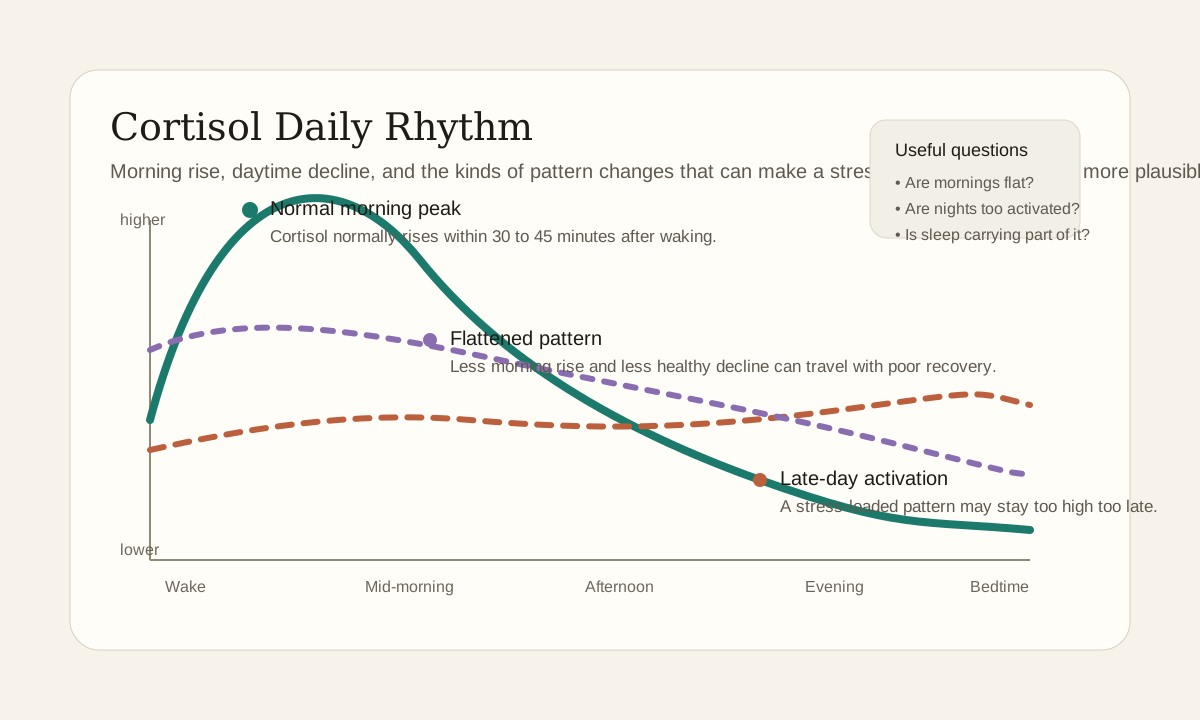
Use this as orientation, not as a self-diagnosis tool.
System guide
HPA Axis and Brain Fog
A visual of how stress load, sleep loss, caffeine, and recovery all push on the same brain-adrenal loop.
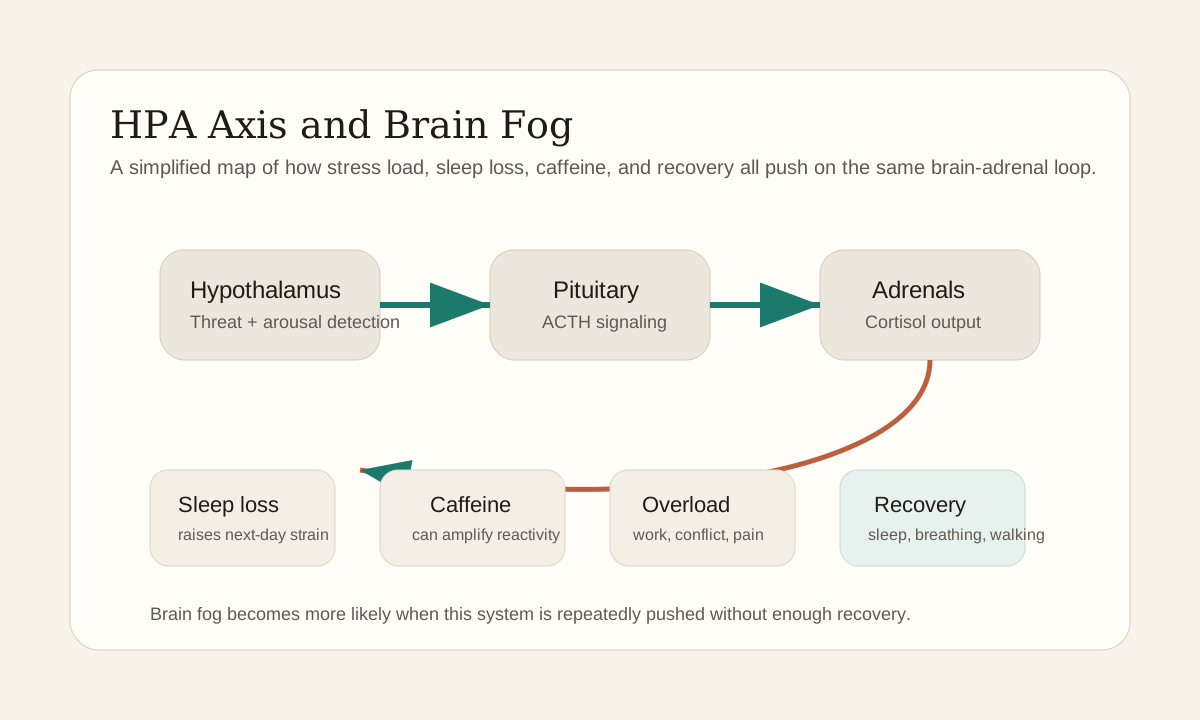
This is a mechanism map, not proof that cortisol is the main driver in every case.
Practical Tool
Cortisol Driver Audit
Pick the version of the story that sounds closest. The goal is to separate ordinary overload, sleep-caffeine amplification, endocrine-rule-out patterns, and mixed hormonal or gut overlap.
This is one of the most common real-world cortisol patterns. The next move is not exotic testing first. It is a short reset of wake time, late caffeine, and the bedtime wind-down so you can see whether the whole system becomes less reactive.
Best next moves
- • Keep wake time consistent for 7 days, even if sleep was poor the night before.
- • Move caffeine later or cut the total dose if you feel wired, shaky, or crash-prone.
- • Protect the last hour before bed from work, doomscrolling, and heavy stimulation.
Best handoff pages
Cause Visual
Cortisol Pattern Map
Pattern-focused visual for Cortisol with mechanism, timing, action, and clinician discussion cues.
Cortisol: The Fog Explained
Cortisol-related fog usually feels like a body that cannot settle and a brain that cannot recover. People often describe being tired, overstimulated, light sleepers, crash-prone, and worse after stress, fasting, or poor sleep rather than simply low energy.
What this pattern often feels like
These community-grounded clues are here to help you recognize the shape of the pattern. They are not a diagnosis.
Cortisol-related fog often presents as hyperarousal, poor recovery, middle-of-the-night waking, stress reactivity, and a wired-but-depleted pattern.
Differentiator question: Does the fog follow stress, fasting, poor sleep, or a pattern of feeling tired but physiologically switched on?
Stress signaling may be central, but it often sits on top of sleep disruption, trauma patterns, blood sugar instability, or autonomic dysfunction.
What Cortisol Brain Fog Usually Feels Like
This pattern usually feels physiologically switched on rather than simply sleepy or empty.
Wired but tired: your body feels revved while your thinking gets worse.
Middle-of-the-night waking, especially around 3am or 4am, with alertness or shakiness.
Poor recovery after stress, conflict, overwork, or hard training.
More brain fog after too much caffeine, alcohol, fasting, or sleep loss.
Thinking that improves faster when the whole system settles than when you just push harder.
These clues are suggestive, not diagnostic. Anxiety, poor sleep, blood sugar issues, pain, thyroid dysfunction, and medication effects can all mimic part of this pattern.
How Cortisol Can Create Brain Fog
Cortisol affects more than mood. The brain-fog pattern usually comes from a stress system that is changing attention, sleep, glucose handling, and recovery at the same time.
Acute stress signaling can impair prefrontal-cortex function, which reduces working memory, planning, and attention under pressure.
Chronic stress exposure is associated with hippocampal and memory changes, especially in overt hypercortisol states.
Cortisol also shifts glucose handling and sleep quality, which is one reason the fog can feel mental and physical at the same time.
The pattern is often amplified by caffeine, alcohol, pain, loneliness, or chronic sleep debt rather than one isolated endocrine abnormality.
Most real-world cases are mixed. The useful question is whether stress physiology is a major driver, not whether cortisol explains every symptom by itself.
Sleep and Cortisol: Nights Change the Next Day
The sleep-cortisol link is stronger than most people realize. Even modest sleep loss can elevate next-evening cortisol and make the whole pattern harder to calm.
Sleep loss can raise evening cortisol the next day.
The cortisol awakening response normally peaks 30 to 45 minutes after waking, then declines through the day.
A poor morning pattern does not diagnose burnout, but it does make sleep quality and wake timing more important than another generic stress hack.
If mornings stay terrible despite better sleep opportunity, check competing causes like sleep apnea, thyroid dysfunction, depression, and medication effects.
Two-Week Cortisol Reset Protocol
The goal is not to chase a perfect stress-free life. It is to see whether the fog becomes less wired, less reactive, and more recoverable when the main stress inputs are lowered together.
Days 1-3: Stabilize mornings
Wake at a consistent time, hydrate, get light, and avoid a frantic phone start.
Days 4-7: Lower the caffeine / sleep load
Cut late caffeine, reduce overall dose if you are jittery, and protect the final hour before bed.
Days 8-10: Add one daily regulation practice
Use breathing, walking, music, laughter, or a short yoga / tai chi session instead of waiting until you are fully fried.
Days 11-14: Track the real drivers
Log stress, sleep, brain fog, caffeine, alcohol, and overload. Look for the repeatable pattern rather than one dramatic cause.
If the pattern does not budge after a real trial, another cause may be doing more of the work than cortisol alone.
Cortisol Brain Fog Symptoms: How It Usually Shows Up
These are pattern signals, not proof by themselves. Use them to guide what to measure, compare, and discuss next.
Morning fog is more plausible here when sleep was fragmented or you woke in the early hours feeling alert, tense, or shaky.
The fog often worsens after caffeine, conflict, poor sleep, or sustained stress rather than after one specific meal.
Hard training can worsen the pattern when recovery is already poor and the system feels chronically overactivated.
Track whether the fog clusters after arguments, caffeine, poor sleep, overtraining, or social overload. Timing still matters, just not in the same way it does for glucose causes.
Shaky, sweaty, or trembly episodes may reflect stress physiology, glucose instability, or both, so context matters more than one symptom alone.
What to Try This Week for Cortisol
- 2
Protect the first hour after waking: light exposure, hydration, and no frantic phone start if you are trying to stabilize the morning cortisol response.
Weekly focus: Morning rhythm.
- 3
Avoid the no-breakfast plus coffee pattern if you already feel wired, shaky, or crash-prone.
Weekly focus: Food.
- 4
Cut evening screen time and protect sleep. Even modest sleep loss can push next-evening cortisol higher.
Weekly focus: Sleep.
- 5
Take a 20-minute walk in a green space or park with the phone away if possible.
Weekly focus: Environment.
- 6
Use one social-buffering intervention this week: a hug, hand-hold, time with a calm pet, or an unhurried conversation.
Weekly focus: Connection.
- 7
Rate stress, sleep quality, and brain fog morning, afternoon, and evening for 7 days.
Weekly focus: Tracking.
Is Cortisol Brain Fog Reversible?
Cortisol-related brain fog is reversible with stress reduction and nervous system regulation. The HPA axis can reset with consistent intervention. Chronic dysregulation takes longer to reverse than acute stress effects.
Typical timeline: Acute stress reduction techniques: minutes for physiological calming. Sleep and nervous system regulation: 2-4 weeks for pattern shift. HPA axis recovery from chronic stress: 2-3 months of consistent practice.
Factors that affect recovery:
- Duration of chronic stress (longer dysregulation takes longer to reset)
- Sleep quality (sleep is when cortisol resets)
- Blood sugar stability (reactive hypoglycemia triggers cortisol)
- Ongoing stressors (can't calm nervous system while threat persists)
- Adrenal function (rarely, adrenal insufficiency needs medical treatment)
Source: Balban et al., Cell Rep Med, 2023; McEwen, NEJM, 1998 (allostatic load)
Context That Changes the Cortisol Story
The same wired-but-tired pattern does not mean the same thing in every context. Hormones, gut symptoms, pain, and medication exposure can all change the interpretation.
Women's health and hormone transition
Cycle shifts, perimenopause, postpartum change, and oral-contraceptive use can all change how stress physiology feels and how morning energy, sleep, and recovery behave. If the timing is clearly hormonal, compare this page with the hormonal pathway instead of leaving the story inside generic cortisol language.
Gut-stress overlap
If bloating, bowel urgency, nausea, or stress-reactive digestion travel with the fog, the gut-brain-stress loop may be part of the problem rather than a separate side issue.
Pain, overtraining, and physical load
A high training load, chronic pain, or repeated under-recovery can create a stress-pattern fog even when the story sounds “mental” at first.
Steroid exposure and endocrine red flags
Prednisone, dexamethasone, inhaled steroids, topical steroids, and some endocrine disorders can change cortisol patterns enough that this should move into a clinician-guided workup.
Useful next links
Useful next pages if the cortisol story looks mixed rather than clean.
Sleep
Open this if unrefreshing sleep and morning heaviness still look louder than the stress story.
Thyroid
Open this if the pattern feels slower, colder, and more uniformly metabolic.
Sugar
Open this if the fog clusters around meals or a clear spike-crash pattern.
Supplements
Use this for the cortisol support section after the bigger levers are addressed.
Food Approach
Primary Option
Steady Meals - No Fasting
For conditions where blood sugar stability or regular energy intake is critical. Anti-crash eating.
Eat every 3-4 hours. Never skip meals. Protein + fat + complex carb at every meal. No intermittent fasting. No caffeine on empty stomach. Protein FIRST at each meal (stabilizes glucose). Light snack before bed if morning fog is an issue.
Blood sugar crashes trigger cortisol spikes. Eat protein + fat at every meal. Never skip breakfast. Caffeine amplifies cortisol - if stressed, reduce or delay morning coffee to 90 min after waking.
Open primary diet pattern →Alternative Options
Gentle Anti-Inflammatory (Recovery-Adapted)
For people who are too fatigued, nauseous, or overwhelmed for complex dietary changes. The minimum effective dose.
Small, frequent, simple meals. Broth/soup if appetite is poor. Add ONE portion of oily fish per week. Add berries when tolerable. Reduce (don't eliminate) ultra-processed food. Hydrate. Don't force large meals.
Open this option →Iron-Repletion Focus
For confirmed or suspected iron deficiency. Pair iron-rich foods with vitamin C. Separate from tea/coffee/dairy.
Iron-rich foods: red meat 2-3x/week, liver 1x/week (if tolerated), lentils, spinach, fortified cereals. ALWAYS pair with vitamin C (bell pepper, orange, kiwi, strawberry). Avoid tea/coffee within 1hr of iron-rich meals. Continue prenatal vitamins if postpartum.
Open this option →How to Talk to Your Doctor About Cortisol and Brain Fog
Suggested Script
"I've been experiencing persistent brain fog, fatigue, and difficulty concentrating, and I want to evaluate whether cortisol or another endocrine issue could be contributing."
Tests To Discuss
- • Morning serum cortisol
- • Late-night salivary cortisol
- • DHEA-S
- • Thyroid testing if the pattern is mixed
Differentiator Questions
- • Does your pattern fit Cortisol more consistently than Anxiety when timing, triggers, and recovery are compared side-by-side?
- • Does your pattern fit Cortisol more consistently than Sleep when timing, triggers, and recovery are compared side-by-side?
- • Does your pattern fit Cortisol more consistently than Burnout when timing, triggers, and recovery are compared side-by-side?
- • When symptoms flare, do they reliably occur 1-3 hours after meals and improve when meal composition changes?
Quiet next step
Get the doctor handout for this pattern
Get the printable doctor handout for this pattern and keep the next steps in one place. No funnel, just the handout and a quiet email reminder if you want it.
How Cortisol Brain Fog Connects Across The Site
Protocol Guides
Clarity Code Factors
- Dysregulation
Circadian, autonomic, or stress-regulation instability often drives fluctuating fog patterns.
- Depletion
Nutrient, oxygen, or energy substrate deficits reduce cognitive reserve and day-to-day reliability.
Metabolic Lens
Primary overlapCortisol shifts glucose handling, sleep quality, and inflammatory signaling, which is why stress physiology can create a whole-body brain-fog pattern rather than a purely emotional one.
- A wired-but-tired pattern with poor recovery, middle-of-the-night waking, or afternoon overactivation.
- Brain fog that worsens after sustained stress, poor sleep, too much caffeine, alcohol, or overtraining.
- Overlap with anxiety, sleep disruption, blood sugar instability, pain, and medication effects.
These clues can raise suspicion, but they do not diagnose a cortisol disorder on their own. They mainly help decide whether sleep, sugar, anxiety, medication, or endocrine testing deserves more attention next.
12 Evidence-Based Insights About Cortisol and Brain Fog
Stress physiology can absolutely contribute to brain fog, but the useful question is how, where, and with what strength of evidence. These are the better-supported cortisol-and-cognition points to know before you over-focus on one hormone story.
Evidence grades: A = strong human evidence, B = moderate evidence, C = preliminary or small-study evidence. Full grading guide
1 Chronic stress exposure is associated with hippocampal and cognitive changes, which helps explain why memory and concentration often worsen together under sustained overload.
▼
Chronic stress exposure is associated with hippocampal and cognitive changes, which helps explain why memory and concentration often worsen together under sustained overload.
Lupien et al., Nat Rev Neurosci 2009 DOI ↗
2 Some of the structural and cognitive effects seen in overt hypercortisol states can improve when cortisol normalizes, especially in treated Cushing's syndrome.
▼
Some of the structural and cognitive effects seen in overt hypercortisol states can improve when cortisol normalizes, especially in treated Cushing's syndrome.
Recovery is possible, but it is not instant or guaranteed.
Starkman et al., Biol Psychiatry 1999 DOI ↗
3 Cyclic sighing is worth trying because a 2023 randomized study found better improvements in mood and anxiety than the comparison breathing and mindfulness practices.
▼
Cyclic sighing is worth trying because a 2023 randomized study found better improvements in mood and anxiety than the comparison breathing and mindfulness practices.
That study did not directly measure cortisol, so treat it as an arousal tool rather than a cortisol proof-point.
Balban et al., Cell Rep Med 2023 DOI ↗
4 Cold hands, muscle tension, shallow breathing, and a fast pulse often travel with sympathetic activation, but none of them diagnose a cortisol disorder by themselves.
▼
Cold hands, muscle tension, shallow breathing, and a fast pulse often travel with sympathetic activation, but none of them diagnose a cortisol disorder by themselves.
Porges, The Polyvagal Theory 2011
5 Heart-rate variability is one useful stress-regulation signal, but a low or blunted pattern should be treated as context, not as a standalone diagnosis.
▼
Heart-rate variability is one useful stress-regulation signal, but a low or blunted pattern should be treated as context, not as a standalone diagnosis.
Thayer & Lane, Neurosci Biobehav Rev 2009
6 Acute stress signaling can impair prefrontal-cortex function quickly, which is one reason stressed thinking often feels distractible, impulsive, and less organized.
▼
Acute stress signaling can impair prefrontal-cortex function quickly, which is one reason stressed thinking often feels distractible, impulsive, and less organized.
Arnsten, Nat Rev Neurosci 2009 DOI ↗
7 A 7-day stress, sleep, and brain-fog log is often more informative than one isolated lab.
▼
A 7-day stress, sleep, and brain-fog log is often more informative than one isolated lab.
The goal is to see whether the pattern is tied to mornings, caffeine, sleep loss, conflict, overtraining, or fasting.
Hellhammer et al., Psychoneuroendocrinology 2009
8 The morning pattern matters.
▼
The morning pattern matters.
Cortisol normally rises 30 to 45 minutes after waking, so repeated low-energy mornings despite enough time in bed are one reason clinicians look harder at sleep quality, timing, and HPA-axis context.
Adam et al., Psychoneuroendocrinology 2006 DOI ↗
9 Affiliative touch and calm social contact can have measurable stress-buffering effects.
▼
Affiliative touch and calm social contact can have measurable stress-buffering effects.
They are not a cortisol cure, but they are not fluff either.
Odendaal & Meintjes, Vet J 2003
10 DHEA-S can add context when the question is long-term stress load rather than a single cortisol snapshot.
▼
DHEA-S can add context when the question is long-term stress load rather than a single cortisol snapshot.
The cortisol-to-DHEA-S ratio is one of the more useful nuance markers in chronic stress discussions.
Phillips et al., Eur J Endocrinol 2010
11 High-intensity exercise can acutely raise cortisol, which matters if you are already sleep-deprived, wired, and under-recovered.
▼
High-intensity exercise can acutely raise cortisol, which matters if you are already sleep-deprived, wired, and under-recovered.
In that state, moderate training is usually the safer experiment.
Hill et al., J Endocrinol Invest 2008
12 Supplements can help around the edges, but they do not resolve the work, trauma, sleep, or relationship load keeping the system activated.
▼
Supplements can help around the edges, but they do not resolve the work, trauma, sleep, or relationship load keeping the system activated.
The main driver still matters more than the capsule.
Hofmann et al., Cognit Ther Res 2012
View all 12 citations ▼
- Lupien et al., Nat Rev Neurosci 2009 doi:10.1038/nrn2639
- Starkman et al., Biol Psychiatry 1999 doi:10.1016/S0006-3223(99)00203-6
- Balban et al., Cell Rep Med 2023 doi:10.1016/j.xcrm.2022.100895
- Porges, The Polyvagal Theory 2011
- Thayer & Lane, Neurosci Biobehav Rev 2009
- Arnsten, Nat Rev Neurosci 2009 doi:10.1038/nrn2648
- Hellhammer et al., Psychoneuroendocrinology 2009
- Adam et al., Psychoneuroendocrinology 2006 doi:10.1016/j.psyneuen.2005.10.015
- Odendaal & Meintjes, Vet J 2003
- Phillips et al., Eur J Endocrinol 2010
- Hill et al., J Endocrinol Invest 2008
- Hofmann et al., Cognit Ther Res 2012
Common Questions About Cortisol Brain Fog
Based on clinical evidence and community insights. Use these as discussion prompts with your doctor, not self-diagnosis.
1. Can cortisol cause brain fog? ▼
Yes. Cortisol-related brain fog is usually a stress-pattern problem rather than a standalone diagnosis. It tends to show up as a wired-but-tired state with poor recovery, early waking, shakiness under stress, and thinking that gets worse after poor sleep, overload, or too much caffeine.
2. What does cortisol brain fog usually feel like? ▼
It usually feels wired-but-tired rather than simply sleepy. People often describe light sleep, 3am or 4am waking, poor recovery, shakiness when stressed or fasting, and a sense that their thinking returns faster when the whole system finally settles.
3. What should I try first if I think cortisol is involved? ▼
Start with one week of lower-stimulation mornings, a screen-light final hour before bed, less caffeine, and one daily breathing or walking reset. If the pattern becomes less wired and your thinking steadies, cortisol-related stress physiology moves higher on the list.
4. What tests should I discuss for cortisol brain fog? ▼
The best first test depends on the actual question. Morning serum cortisol is usually the first step when low cortisol or adrenal insufficiency is the concern. Late-night salivary cortisol, 24-hour urine cortisol, or dexamethasone suppression testing fit better when high-cortisol states like Cushing's syndrome are the concern.
5. When should I bring cortisol brain fog to a clinician? ▼
Bring it in when the fog is persistent, function is dropping, sleep is fragmenting, or you are also dealing with weight change, severe fatigue, blood-pressure issues, steroid exposure, or symptoms that make an endocrine disorder more plausible. Escalate urgently for sudden confusion, focal neurologic symptoms, seizures, fever with confusion, or rapid decline.
6. How is cortisol brain fog different from anxiety? ▼
There is real overlap. Anxiety fog is more likely to spike with rumination, panic physiology, or a clear threat pattern. Cortisol-pattern fog is more likely to travel with poor recovery, early waking, caffeine sensitivity, overtraining, and a whole-body stressed state even when the mind is not obviously panicking.
7. Could this be Anxiety instead of Cortisol? ▼
Possibly. Anxiety often amplifies the cortisol pattern, and cortisol-focused language can become a catch-all when the main problem is panic, rumination, sleep disruption, or trauma. If the story is strongly psychological and less endocrine-looking, anxiety may be the closer fit.
8. How long does it take to lower cortisol? ▼
Acute calming practices like slow breathing can change how you feel within minutes. Sleep and caffeine changes usually need several days to a few weeks for a fair trial. If ashwagandha helps, trials suggest the more meaningful change shows up over about 8 weeks rather than overnight.
9. Is adrenal fatigue real? ▼
Adrenal fatigue is not a recognized medical diagnosis. The more defensible language is HPA-axis dysregulation or stress-physiology dysfunction. That does not mean the symptoms are fake; it means they should not be confused with proven endocrine diseases like Cushing's syndrome or adrenal insufficiency.
10. What causes elevated cortisol in the first place? ▼
Common contributors include chronic psychological stress, sleep loss, overtraining, too much caffeine, alcohol, loneliness, pain, steroid medications, and medical problems like Cushing's syndrome. In real life, the pattern is often multiple small drivers rather than one dramatic endocrine disorder.
📖 Glossary of Terms (5 terms) ▼
Cortisol
The body's main glucocorticoid stress hormone. It follows a daily rhythm and helps regulate alertness, glucose availability, blood pressure, and stress responses.
prefrontal cortex
The front region of your brain responsible for planning, decision-making, working memory, and focus.
HPA axis
Hypothalamic-pituitary-adrenal axis — the brain-to-adrenal gland communication system that controls your stress response.
cortisol awakening response
The normal rise in cortisol during the first 30 to 45 minutes after waking. A blunted pattern can show up in chronic stress and poor recovery states.
DHEA-S
A long-acting adrenal hormone often used alongside cortisol to add context to chronic stress and HPA-axis discussions.
Related Articles
Cortisol and Brain Fog
Deep guide that expands the cause page with symptom-feel, differentiation, test triage, and doctor-prep language.
Anxiety and Brain Fog
Nearby confusion-pair article for side-by-side differentiation.
Sleep and Brain Fog
Nearby confusion-pair article for side-by-side differentiation.
When to Seek Urgent Help
STOP - Seek urgent medical evaluation if: sudden onset of cognitive symptoms (hours/days), new focal neurological symptoms (weakness, numbness, vision or speech changes), seizures, fever with confusion, or rapidly progressive decline. These may indicate a medical emergency requiring immediate care, not lifestyle modification.
Deep Dive
Clinical Fit + Advanced Detail
▼
Deep Dive
Clinical Fit + Advanced Detail
How This Cause Is Evaluated
The analyzer ranks all 66 causes, but this page shows the exact clues that strengthen or weaken Cortisol so your next steps stay logical.
Direct Evidence Needed
- ✓ Story language directly matches a recurring Cortisol pattern rather than broad fatigue alone.
- ✓ Symptoms recur with a repeatable trigger/timing pattern that is physiologically plausible for Cortisol.
Supporting Clues
- + Context clues (history, exposures, or coexisting conditions) support Cortisol as a priority hypothesis. (weight 7/10)
- + At least two independent signals point in the same direction without strong contradiction. (weight 6/10)
- + Response to relevant interventions tracks closer with Cortisol than with Anxiety. (weight 5/10)
What Lowers Confidence
- − A competing cause (Anxiety) has stronger direct evidence in the story.
- − Core expected signals for Cortisol are missing across history, timing, and triggers.
Timing Patterns That Strengthen This Fit
Worse in the morning
Cortisol can present with morning-heavy fog when sleep or overnight physiology is relevant.
After-meal worsening
Post-meal worsening can strengthen Cortisol when metabolic or inflammatory triggers are involved.
Worse after exertion
Post-exertional worsening can increase confidence for Cortisol when recovery capacity is reduced.
Differentiate From Similar Causes
Question to ask
Does your pattern fit Cortisol more consistently than Anxiety when timing, triggers, and recovery are compared side-by-side?
▼
Question to ask
Does your pattern fit Cortisol more consistently than Anxiety when timing, triggers, and recovery are compared side-by-side?
If yes: Pattern consistency is stronger for Cortisol.
If no: Pattern consistency is stronger for Anxiety.
Compare with Anxiety → Question to ask
Does your pattern fit Cortisol more consistently than Sleep when timing, triggers, and recovery are compared side-by-side?
▼
Question to ask
Does your pattern fit Cortisol more consistently than Sleep when timing, triggers, and recovery are compared side-by-side?
If yes: Pattern consistency is stronger for Cortisol.
If no: Pattern consistency is stronger for Sleep.
Compare with Sleep → Question to ask
Does your pattern fit Cortisol more consistently than Burnout when timing, triggers, and recovery are compared side-by-side?
▼
Question to ask
Does your pattern fit Cortisol more consistently than Burnout when timing, triggers, and recovery are compared side-by-side?
If yes: Pattern consistency is stronger for Cortisol.
If no: Pattern consistency is stronger for Burnout.
Compare with Burnout →How People Describe This Pattern
- • My most prominent issues are wired but tired and cant wind down.
- • I also struggle significantly with second wind at night.
- • These symptoms feel like a repeatable pattern that affects my cognition.
Often Confused With
Anxiety
OpenCortisol and Anxiety can both present as fatigue + concentration problems when story detail is sparse.
Key question: When timing and trigger details are compared directly, which pattern fits better: Cortisol or Anxiety?
Sleep
OpenCortisol and Sleep can both present as fatigue + concentration problems when story detail is sparse.
Key question: When timing and trigger details are compared directly, which pattern fits better: Cortisol or Sleep?
Burnout
OpenCortisol and Burnout can both present as fatigue + concentration problems when story detail is sparse.
Key question: When timing and trigger details are compared directly, which pattern fits better: Cortisol or Burnout?
Use This Page With the Story Analyzer
Use this starter to run a focused check while still comparing all 66 causes:
"I want to check whether Cortisol could explain my brain fog. My most relevant symptoms are wired but tired, cant wind down, and it gets worse with chronic stress, overwork."
Map My Pattern for CortisolBiomarkers and Tests
Cortisol Assessment
- Morning serum cortisol (best first when low cortisol or adrenal insufficiency is the concern; draw around 8am)
- Late-night salivary cortisol (useful screening test when Cushing's syndrome is the concern)
- 24-hour urinary free cortisol or 1mg overnight dexamethasone suppression test when pathology is suspected
- DHEA-S as a complementary marker when looking at longer-term HPA-axis context
Doctor Conversation Script
Bring concise evidence, request specific tests, and agree on rule-out criteria.
Initial Visit
"I want to systematically evaluate whether Cortisol is contributing to my brain fog and compare it against close alternatives."
Key points to emphasize
- • Please document what findings would confirm this cause versus lower confidence.
- • I want an evidence-first workup with clear follow-up criteria.
- • Please note which competing causes should be checked in parallel if results are inconclusive.
- • Please separate metabolic, sleep, autonomic, and medication overlap before narrowing to one cause.
Tests to discuss
Morning serum cortisol
A practical first-step test when low cortisol or adrenal insufficiency is on the list.
Late-night salivary cortisol or dexamethasone suppression testing
These are better matched to the high-cortisol pathology question.
Supplements — What the Evidence Says
Supplements are adjuncts, not replacements for lifestyle changes. Discuss with your healthcare provider.
Ashwagandha (KSM-66 or Sensoril)
Dose: KSM-66 600mg/day or Sensoril 240mg/day
Useful as an adjunct if sleep, stressor load, and regulation habits are already being addressed. It is not a substitute for changing the driver.
Evidence: Moderate - Chandrasekhar et al., Indian J Psychol Med, 2012: approximately 27.9% serum cortisol reduction over 60 days
Chandrasekhar et al., Indian J Psychol Med, 2012
Rhodiola rosea
Dose: 200-600mg/day standardized extract
Most useful for stress-related fatigue rather than frank endocrine disease. Consider morning dosing only because it can feel activating.
Evidence: Moderate-overlap - Olsson et al., Planta Med, 2009: improved stress-related fatigue and attention under strain, not a stand-alone cortisol diagnosis tool
Olsson et al., Planta Med, 2009
Phosphatidylserine
Dose: 400-800mg/day
Best used when the main problem is a high stress response to cognitive or exercise load.
Evidence: Moderate - Hellhammer et al., Stress, 2004
Hellhammer et al., Stress, 2004
L-theanine
Dose: 200-400mg/day
A light-touch option when hyperarousal and caffeine sensitivity are part of the story.
Evidence: Moderate-overlap - Kimura et al., Biol Psychol, 2007: supports acute stress-response smoothing more than treatment of a primary cortisol disorder
Kimura et al., Biol Psychol, 2007
Omega-3 fish oil
Dose: 2-4g/day EPA+DHA combined
More of an overlap support for stress-inflammation patterns than a direct cortisol treatment.
Evidence: Moderate-overlap - Kiecolt-Glaser et al., Brain Behav Immun, 2011: stronger for inflammation and anxiety buffering than for cortisol-specific treatment
Kiecolt-Glaser et al., Brain Behav Immun, 2011
Probiotics
Dose: Strain-specific; often 10-20 billion CFU/day in multi-strain products
Most relevant when gut symptoms and stress sensitivity travel together.
Evidence: Mixed-overlap - Zhang et al., Brain Behav Immun, 2020: more useful for gut-brain-stress context than as a proven direct cortisol-lowering supplement
Zhang et al., Brain Behav Immun, 2020
Psychological Support and Therapy
CBT for chronic stress/burnout. If trauma-related → trauma-focused CBT or EMDR. If work-related → occupational health or burnout coaching. ACT (Acceptance and Commitment Therapy) particularly effective for stress that can't be removed.
Quick Reference
Quick Win
Cyclic sighing: double inhale through the nose (long + short top-up), then a slow extended exhale through the mouth. Practice for 5 minutes daily as a fast way to lower physiological arousal.
Balban et al., Cell Rep Med, 2023
Not sure this is your cause?
Brain fog can have many causes. The story analyzer can help narrow down what pattern fits best for you.
About This Page
Written by
Dr. Alexandru-Theodor Amarfei, M.D.Medical reviewer and clinical content lead for the What Is Brain Fog cause library
Research methodology
Evidence-based approach using peer-reviewed sources
View our evidence grading standardsLast updated: . We review our content regularly and update when new research emerges.
Important: This content is for educational purposes only and does not replace professional medical advice. Consult a qualified healthcare provider for diagnosis and treatment.
Claim-Level Evidence
- [A] Cortisol testing should be matched to the actual clinical question, because the best screening tests differ for high-cortisol versus low-cortisol disorders. medium/validated
- [C] Pattern-focused visual summary for Cortisol intended to support structured, non-diagnostic investigation planning. low/validated
- [B] cortisol: Lupien et al., Nat Rev Neurosci, 2009 - Stress effects on brain across lifespan. medium/validated